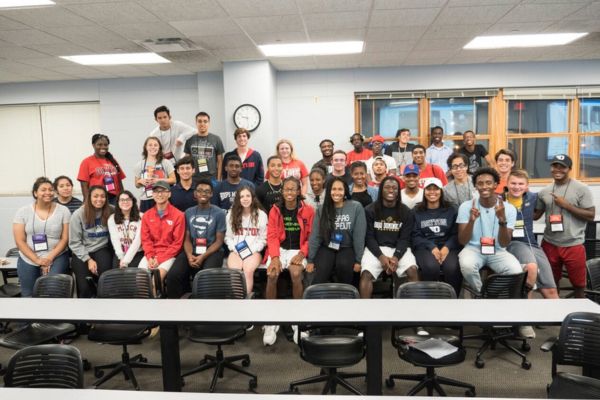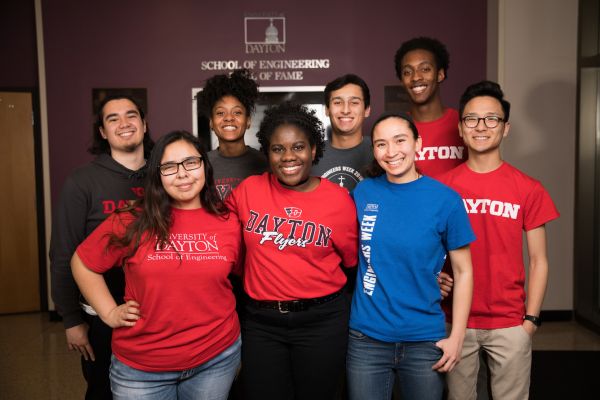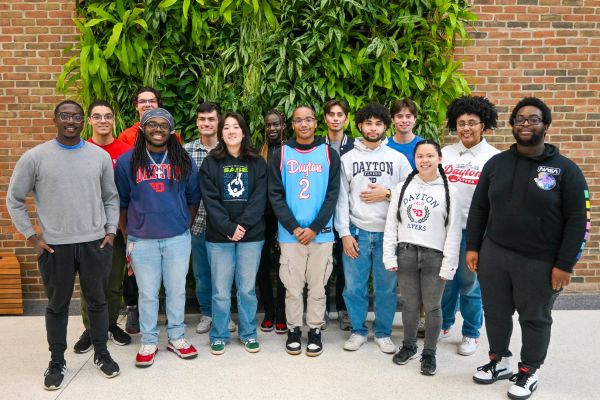
For 30 years, the University of Dayton's Multi-Ethnic Engineers Program has been built around a simple idea: Students are more likely to succeed when they know they belong.
What began in 1996 as an effort to improve the experiences and outcomes of minority engineering students has grown into a community that has supported hundreds of students through their education and into careers.
“MEP’s history is a story about the students, mentors, industry partners, faculty and staff who built a community,” said Alison Ekpelu, current MEP director and 2018 alumna of the program and the Minority Leaders Program through MEP, “And the generations of graduates who have carried that community with them.”
When MEP was founded in 1996, the national landscape for minority engineering students was challenging. The National Action Council for Minorities in Engineering reported that two out of every three minority students who pursued an engineering degree would not graduate. At the University of Dayton, the graduation rate for minority engineering students was similarly low, at approximately 33%.
But UD decided to take action. UD understood then, as it does today, that thriving and persisting in engineering requires students to feel connected, supported and encouraged within the engineering community. With support from local industry partners, the Minority Engineering Program was created to recruit talented students from diverse backgrounds, address the financial barriers many students faced and create a supportive environment where students could build meaningful relationships with peers, faculty and staff.
For senior electrical engineering major Nico Gamboa, that welcoming environment started on day one.
“I made a lot of good friends even on that first day, and I think that's definitely when I felt like I belonged,” Gamboa said. “It’s a community where I could learn and grow from others' experiences, share my experiences and just help encourage each other to do the best we can at school.”
A Home Within a Larger Home
For students entering an engineering program where they might not see many people who shared their backgrounds or experiences, having a community makes a meaningful difference. MEP provided a place to find peers, mentors and people who understood the challenges of pursuing an engineering degree.
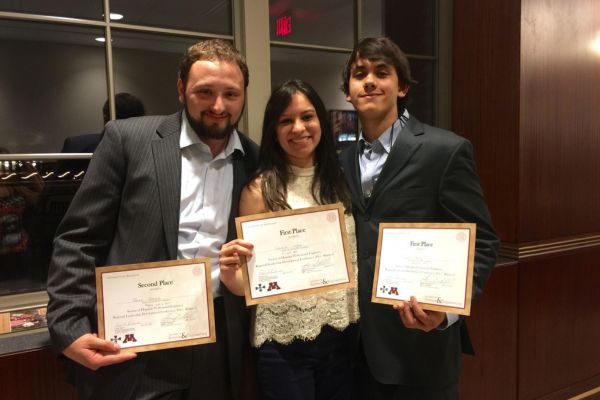
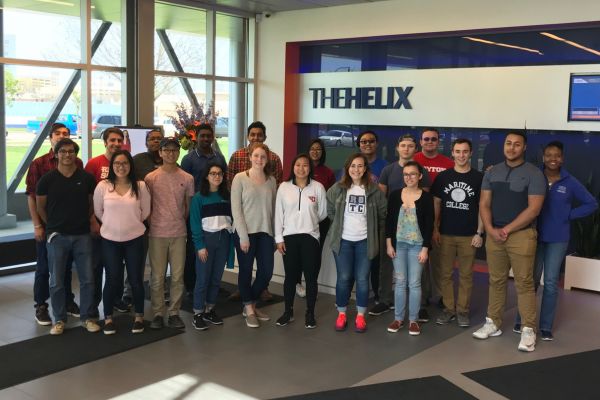
MEP became a home within the larger university community. Students developed friendships, found mentors and built professional relationships through the program. They supported one another academically and personally, celebrated one another's accomplishments and created connections that often continued long after graduation.
“Alison Ekpelu really cares about every one of her students, especially when we have one-on-one talks with her. She gives us advice, and we can just tell her how we're feeling and how everything's going at school,” Gamboa said. “Alison is very good at knowing how to make resumes, network and how to prepare for interviews, so she definitely taught me a lot.”
Relationships and Connections That Last a Lifetime
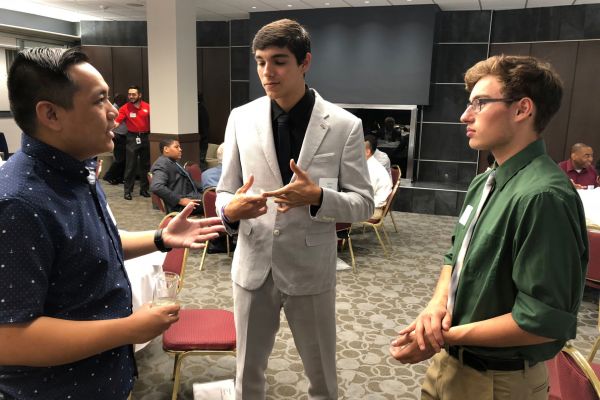
MEP alumni have gone on to become engineers, project managers, executives, entrepreneurs and leaders across industries. Some found their first professional mentors through the program. Others formed friendships that have lasted decades. For many, the relationships they developed through MEP became lifelong connections.
Kasandra Maxwell ‘11 spent much of her career at the Air Force Research Lab, an opportunity that started through the Minority Leaders Program (MLP), before coming back to UD to give back to a school that gave so much to her. She now serves students as a holistic academic advisor in the Office of Student Success in the School of Engineering
“MEP helped me see what I could achieve, even when I didn’t think that I could. MEP was my force for being at UD. It taught me a lot about networking and community, and looking back I realize how much that has influenced the way I move through life and within my career. I always try to make good connections because I never know where they could lead,” Maxwell said. “And then just the friendships. I built some incredible relationships with peers through MEP, that I still have to this day.”
Supporting students means investing in the people behind the degrees, and that investment has paid off. Today, the School of Engineering has an overall graduation rate of approximately 80%, while the graduation rate for minority engineering students is approximately 71%.
“Maceo Cofield (MLP director from 2005 to 2019) had a huge influence on me staying. There were many times where I'm like ‘I'm not doing engineering anymore’. But every time, he showed me what the end result could look like. Being in connection with the people who I was in MEP with and seeing those people succeed, it kind of gives you the extra boost to want to keep going,” Maxwell said. “When you have someone who is in your corner and can see your struggles and is there to support you, I think that makes a world of difference.”
Evolving and Expanding
Over three decades, the program has also evolved alongside the students it serves. In 2021, the program changed its name from the Minority Engineering Program to the Multi-Ethnic Engineers Program. The change reflected UD's evolving approach to recognizing and celebrating students from diverse racial and ethnic backgrounds while maintaining the community-centered mission.
Today, that mission is expanding again with computer science and physics now part of the School of Engineering. The community of students pursuing STEM disciplines within the school has grown and has created an opportunity to extend the model to even more students.
The program is now evolving into the Multi-Ethnic Scientists and Engineers Program (MSEP) and reflects the program's longstanding willingness to respond to the needs of its students. Computer science and physics students will have opportunities to participate in the same community-centered approach that has defined MEP — building relationships, finding mentors, developing professional connections and supporting one another.
“The expansion also creates an opportunity for students from different STEM disciplines to learn from one another,” Ekpelu said. “They may have different academic experiences, but they share many of the same challenges and opportunities as they prepare for STEM careers. Bringing them together creates another way for students to build connections across disciplines.”
Thirty years later, generations of students have entered the program, alumni have returned as mentors, industry partners have invested in students and faculty and staff have helped students navigate both the challenges and opportunities of their education.
This anniversary is a chance to recognize the people who built MEP, celebrate the students who have been part of it and look toward the students who will shape its next chapter.
The Multi-Ethnic Scientists and Engineers Program carries that history forward.
Interested in learning more about MSEP today? Join us for a virtual Insider Update on Nov. 9 or learn about other ways to engage.