61 summers strong
Through UD’s Summer Appalachia Program, Tess Schlegel found connection in everyday moments and learned how UDSAP continues to shape both students and the Salyersville community.
In Salyersville, Kentucky, the small moments — a car ride, a porch conversation, a bag of extra school lunches — reveal deep truths about community and purpose.

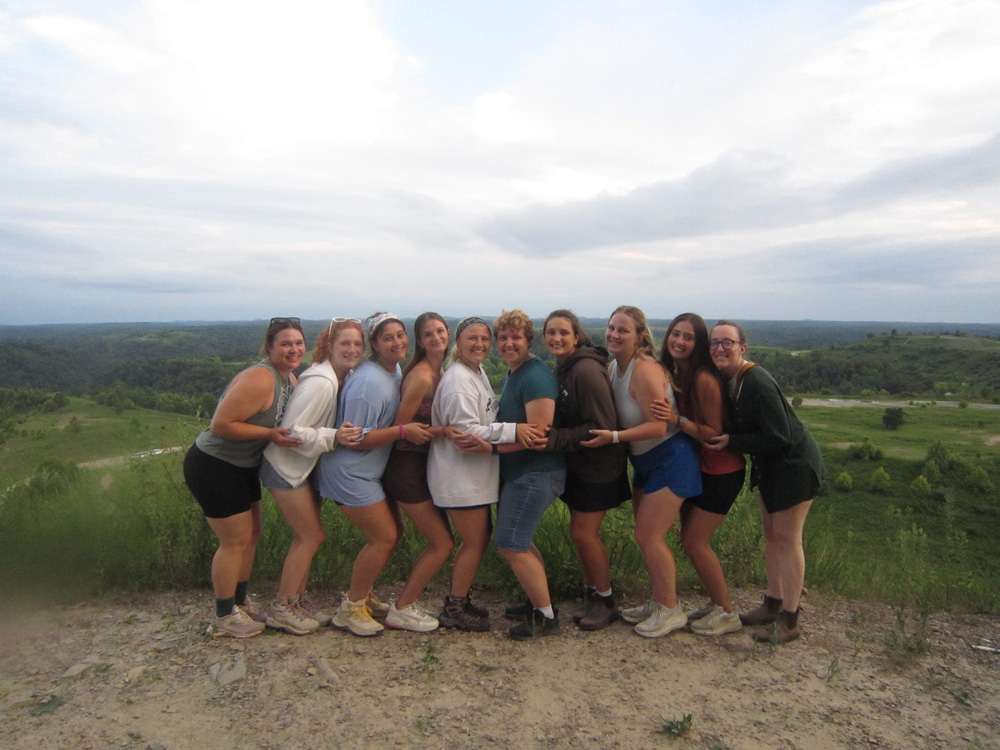
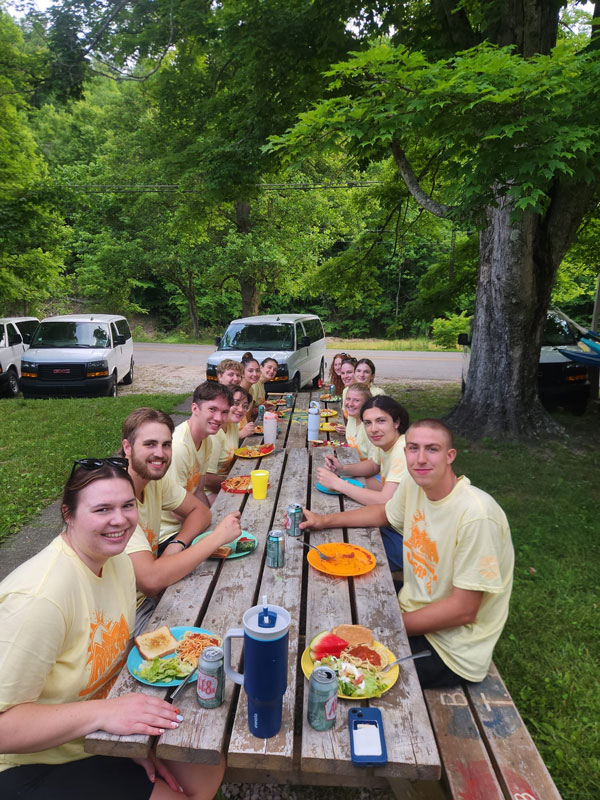
Senior exercise science major Tess Schlegel was among 12 University of Dayton students who spent nearly two months in the Appalachian town through UD’s Summer Appalachia Program, living in community as they explored their faith, volunteering at the local nursing home and leading day‑camp and teen‑center programming.
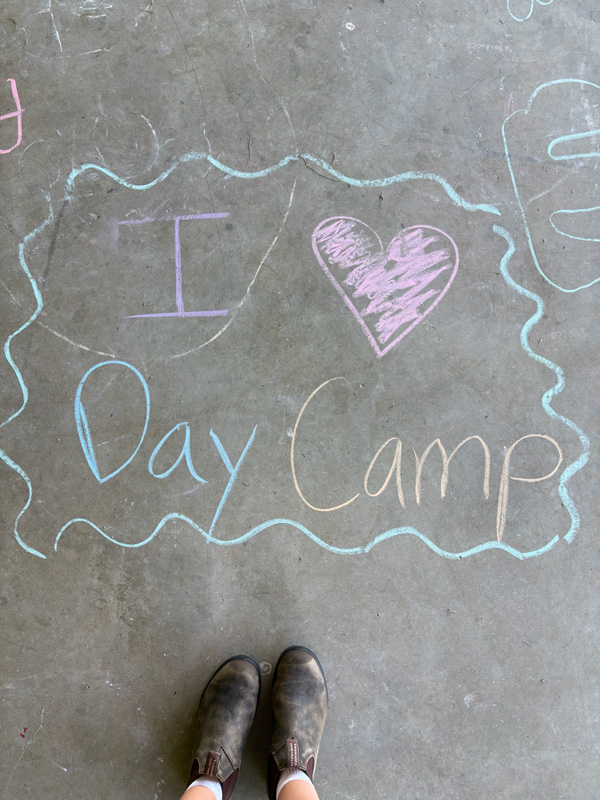
Days begin early, with participants piling into vans to pick up children across town. “We take them to the park and [spend time] with them,” she said. “There were different themes every week. The [final week] was a carnival theme, and we had a bouncy house.”
Some of the most meaningful connections came between stops.
“Salyersville doesn’t have a lot, but they have a lot of community, and a whole lot of love.”
“I love the van rides,” she said. “The realest point of connection happens there. They’re requesting their favorite music, we’re talking one-on-one, and the teens always ask to be dropped off last because they want to stay in the vans longer.”
Even quick errands led to conversations with locals who recognized “the UD group.” At a grocery store, an older man told them he had participated in the program as a child and handed them money to buy ice cream for the kids.
“Being so known and so loved by people [here] is so cool,” she said. “Salyersville doesn’t have a lot, but they have a lot of community, and a whole lot of love.”
Twice a week, the group visited the nursing home to play bingo and spend time with residents. Conversations with nurses at the rehabilitation center reaffirmed Schlegel’s future in physical therapy and strengthened her commitment to underserved communities. “Seeing the lack of access to health care here and all the barriers to receiving care made me want to do more with my license than just work at a private clinic,” she said.
“Seeing the lack of access to health care here and all the barriers to receiving care made me want to do more with my license than just work at a private clinic.”
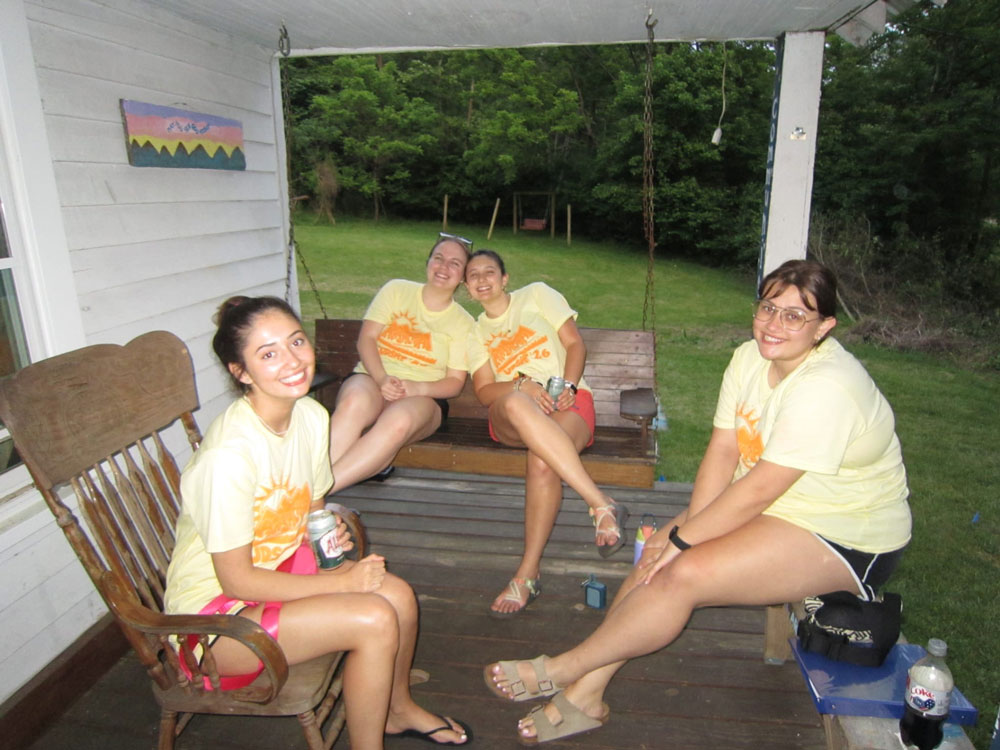
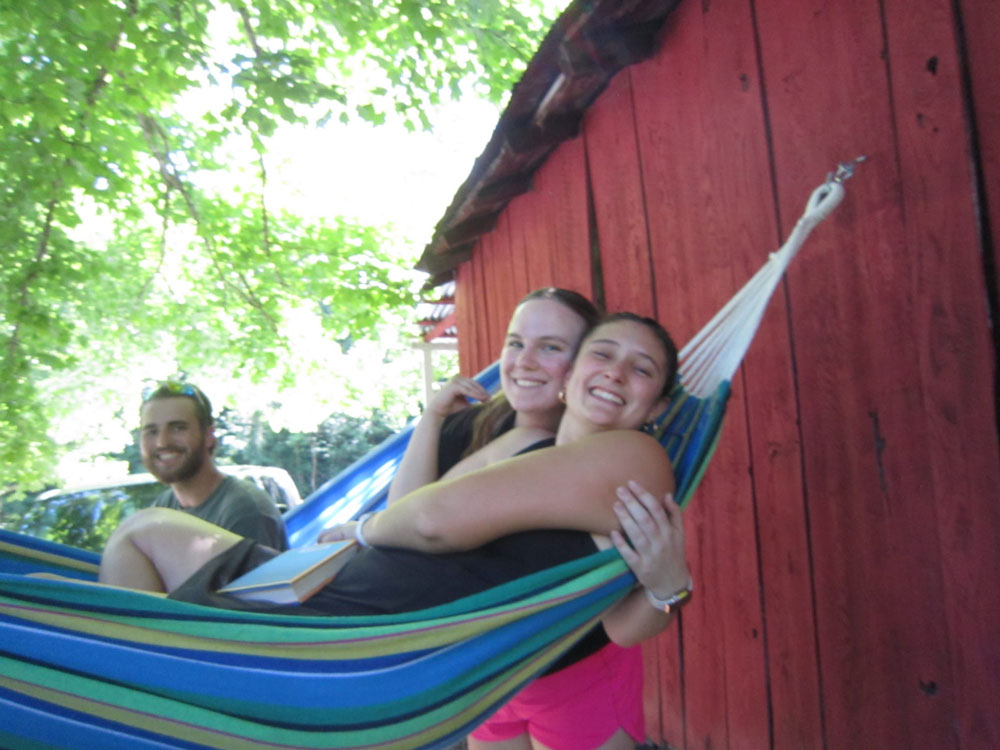
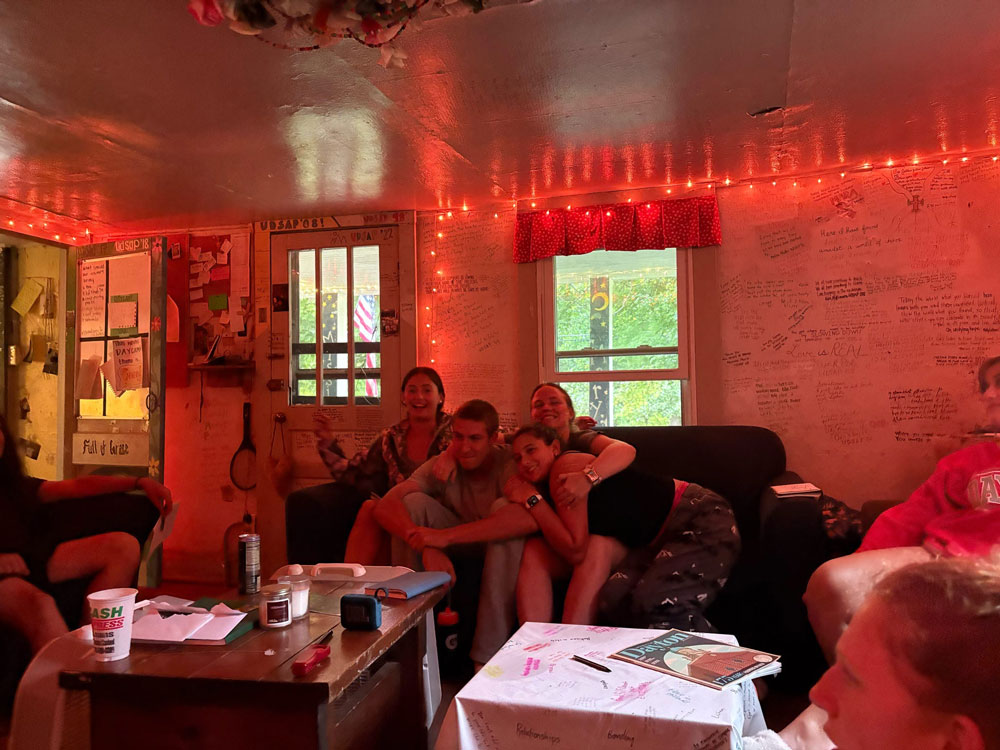
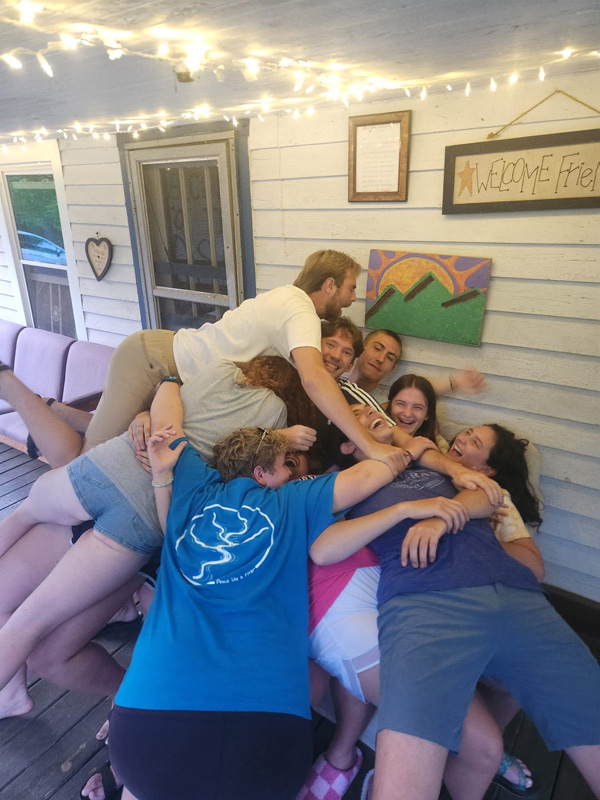
Life in the house added another layer of connection. With limited cell service, Schlegel said the group spent much of its downtime together — often on the porch, which she called “the heart of the home” — talking, reading or driving to a nearby lake to enjoy time together outside their daily routine. The quiet helped her rethink her relationship with her phone, seeing it “more as a communication tool and less as entertainment.”
She also witnessed how UDSAP can make a tangible difference. During a home visit, a mother thanked the group for sending home extra school lunches — enough to help her buy back‑to‑school clothes for her children. “Seeing the impact we’ve had, even in small ways, is incredible,” she said.
That continuity reflects renewed investment in UDSAP, from listening sessions and improvements to the house to a new MiniCourse developed in recent years. The University is now undertaking a long‑term effort to raise more than $800,000 to sustain UDSAP’s summer service and strengthen the property for future generations. Recent student support, including $16,802 raised through Flyer Funder, is part of that broader commitment.
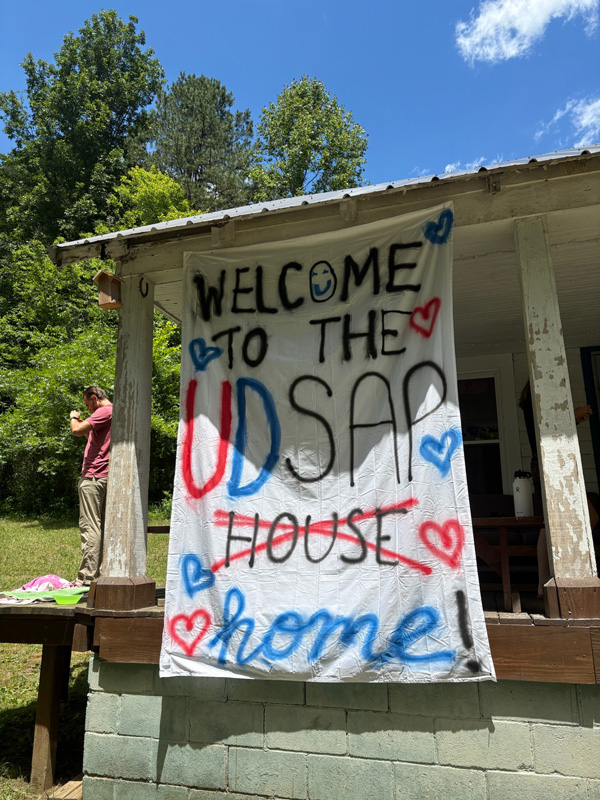
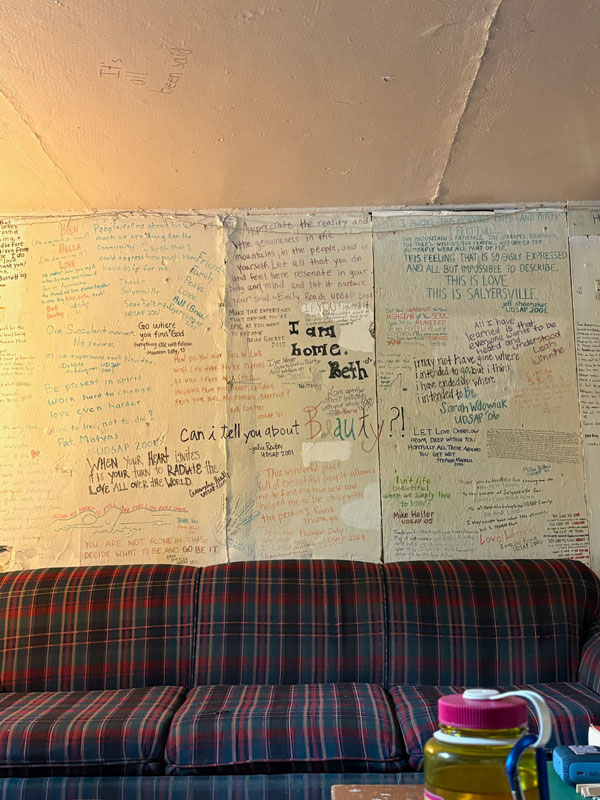
“My UD experience has been completely changed because of donors. … They’re the ones that allow a 61‑year program to be 61 years,” she said. “It becomes a home, a vessel for the community. All the memories are there: the porch, the land, everything people talk about when they come back.”
Looking toward graduation, Schlegel said she returned with “a new perspective” — a shift she traced to the slower pace, deep relationships and daily immersion the program provides.
“I want to slow down and be intentional with the way I encounter people,” she said. “I hope to invite people in. To leave things a little better than I found them.”
A version of this article appears in print in the Autumn 2026 University of Dayton Magazine, Page 20. EXPLORE THE ISSUE — MORE ONLINE