My Flyer Story: Love thy neighbor
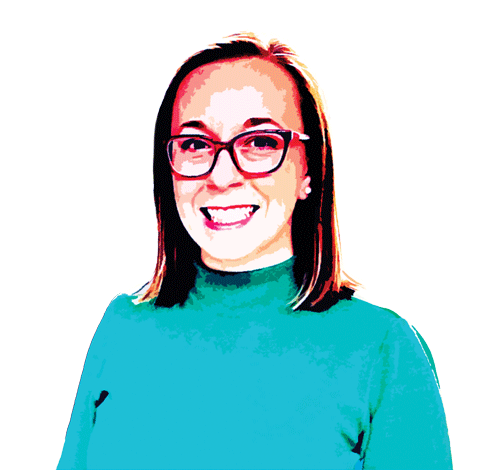
Alisa Vidulich Casavant ’13 shares how UD led her from West Virginia to health policy leadership — and into a life spent advocating for others.
Growing up in Morgantown, West Virginia, I learned what it means to come from a place often misunderstood and overlooked.
But my West Virginia was never the stereotype. It was neighbors waving you through intersections, family friends arriving before you knew you needed them, and a community stitched together by perseverance and an unspoken creed: take care of one another. My dad was a teacher and later an assistant principal; my mom was the first physician assistant hired into a pediatric surgery role she helped create. Service to others wasn’t a lofty virtue; it was simply how life worked.
It was ... a community stitched together by perseverance and an unspoken creed: take care of one another.
Government, policy and Washington felt reserved for people with money or political pedigrees. What I did know was that I was curious. I wanted to understand people, cultures and systems: why some communities thrive, why others face barriers and who gets to decide.
David Darrow, associate professor of history and my academic advisor, made me feel seen immediately. I still laugh remembering how I asked him what a tornado siren sounded like — something I’d never heard growing up in the Appalachian Mountains. He didn’t dismiss my worry. He found a recording online, made me an emergency checklist and helped me feel safe.
Faculty at UD pushed me toward opportunities I never would’ve pursued alone. They expanded my sense of what service could look like, not only in hospitals or classrooms but in policy, advocacy and systems-level change. A French and international studies major, I’d only taken two political science classes, but professors insisted I apply for the inaugural Statehouse Civic Scholars Program. That experience, along with leadership programs, shadowing opportunities and the Dayton2DC career immersion, connected my curiosity to real possibilities.
The program led to an internship in UD’s Office of Government and Regional Relations, which led to relationships at the Ohio Statehouse, which led — the day after graduation in 2013 — to my first job working for the majority whip. My boss, Rep. Cheryl L. Grossman, taught me how to carry myself at events, work respectfully with people who hold different viewpoints and find my footing in rooms where I was often the youngest person there.
Today, as senior director of policy at the Arthritis Foundation, I lead federal and state health policy strategy to improve access to affordable, high-quality care for people living with arthritis and chronic disease. My work focuses on access to care, insurance coverage, affordability, vaccine policy and patient protections and is rooted in listening to patients and families, my own lived experience and the gaps I’ve watched people fall through when systems are too hard to navigate.
“My work ... is rooted in listening to patients and families, my own lived experience and the gaps I’ve watched people fall through when systems are too hard to navigate.”
And I get to give back what Dayton gave me. I’ve helped build an internship pipeline on our advocacy team, recruiting students, creating placements and hosting UD interns every summer. We recently hired one of those Flyers into a state affairs role. Mentoring them — helping them see their voices belong in rooms they may not have imagined — is meaningful.
This work is hard, but it is deeply human and often joyful. I do it because it matters. I can’t unknow what I now know. Advocacy has become its own kind of promise — my way of saying, “I see you, I honor your inherent dignity and I will stand with you in the places where the world feels heavy.” Because that’s what neighbors do.
Photograph courtesy Alisa Vidulich Casavant ’13.
A version of this article appears in print in the Autumn 2026 University of Dayton Magazine, Page 48. EXPLORE THE ISSUE — MORE ONLINE