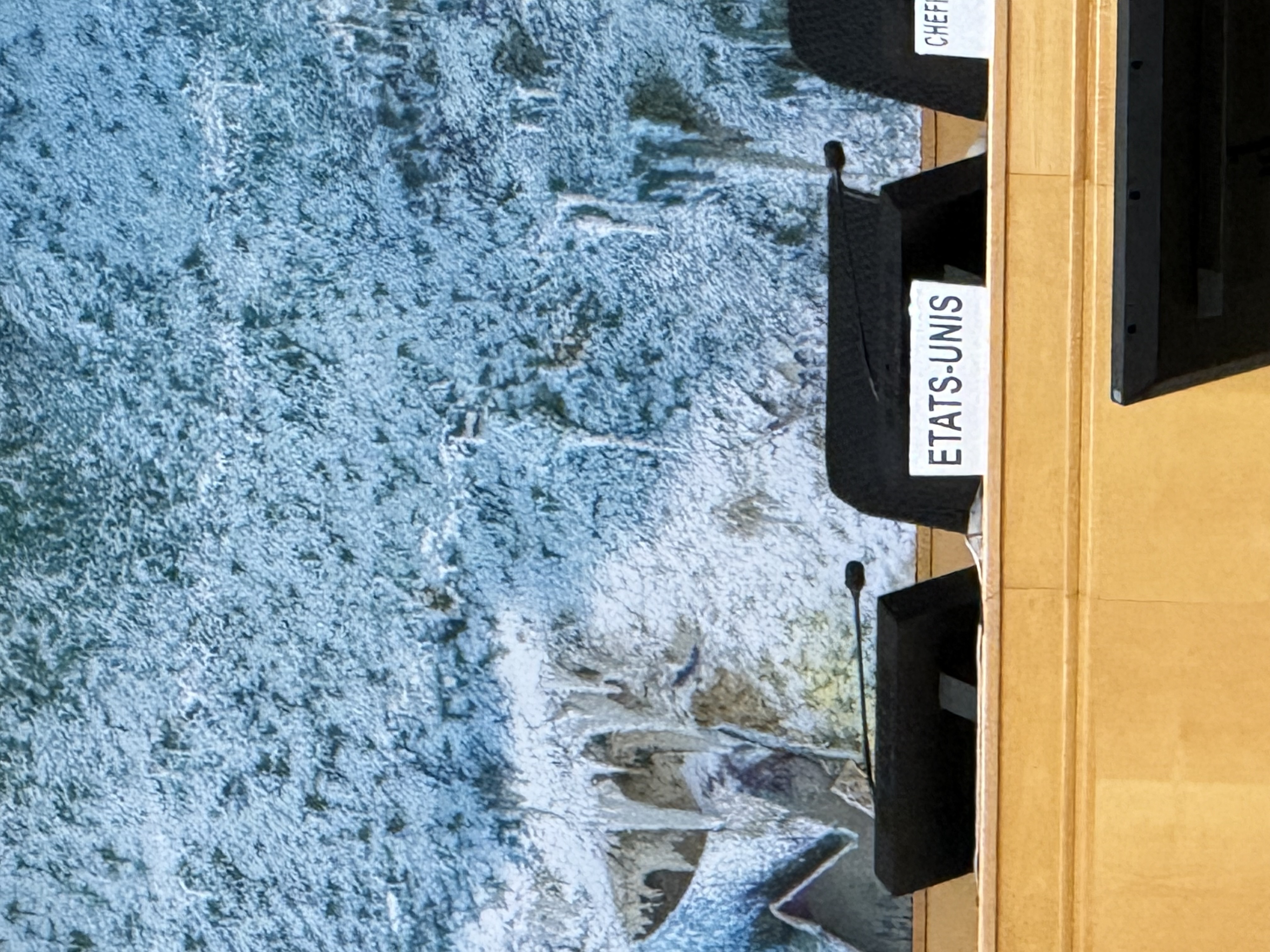
I’ve just returned from a trip to Geneva, Switzerland, where I represented the University of Dayton Human Rights Center on a civil society delegation of advocates and affected people that traveled to contribute to a monitoring process administered by the United Nations Human Rights Council (HRC) called the Universal Period Review (UPR). UPR is essentially a peer review that UN Member States conduct of each other on a four-year cycle and its signature quality is that ALL states participate. This week, however, the United States became the first government to persistently refuse to participate since the UPR began in 2008. The review was initially scheduled to take place a year ago and when the government failed to appear then, the Council extended the cycle another year, hoping to encourage US engagement. Yesterday, when the US was called and its seat in the Assembly Hall in the Palais de Nations was empty, the UPR session was closed with no review.
A general discussion of the HRC opened on the topic of non-cooperation because since this had never happened before there was no precedent and no protocol in place. A prepared draft resolution was introduced that again offered an extension, this time by January before the official end of the Fourth Cycle. The resolution expressed regret for the US decision, called upon the US to resume its participation with the UPR, and requested that the HRC President “continue to take all appropriate steps and measures, in accordance with his mandate, to urge the State under review to resume its cooperation with the universal periodic review mechanism.” The Council, like other international human rights mechanisms more broadly, operate with a logic that the best way to advance human rights progress is through polite discourse, dialogical engagement, and incremental steps; it is better to have states at the table, then to risk pushing them away with more forceful condemnation or through coercive penalties.
A representative from the Netherlands spoke on behalf of the European Union to express consensus support for the draft resolution, naming the United States’s absence, but only in passing. Spain spoke to echo and didn’t mention the US at all. Then Cuba raised the temperature briefly with a litany of criticisms from the Trump administration’s attacks on DEI to racist police violence and the “asphyxiating” embargo itself. But that was it. The room was more than half empty and no other country said a word, not in opposition to the US nor in defense of the mechanism. The concern surrounding non-cooperation centers on how it may encourage other states to refuse the process; that the UN has lost a crucial oversight opportunity to promote human rights in the US; and that US civil society is denied a critical platform for raising issues and sharing experiences from the frontlines. US non-cooperation risks setting off a domino effect where other states follow suit, which would existentially threaten the UPR. But the hollow tone in the room was either of surrender or of apathy. It wasn’t obvious to me that anyone even cared.
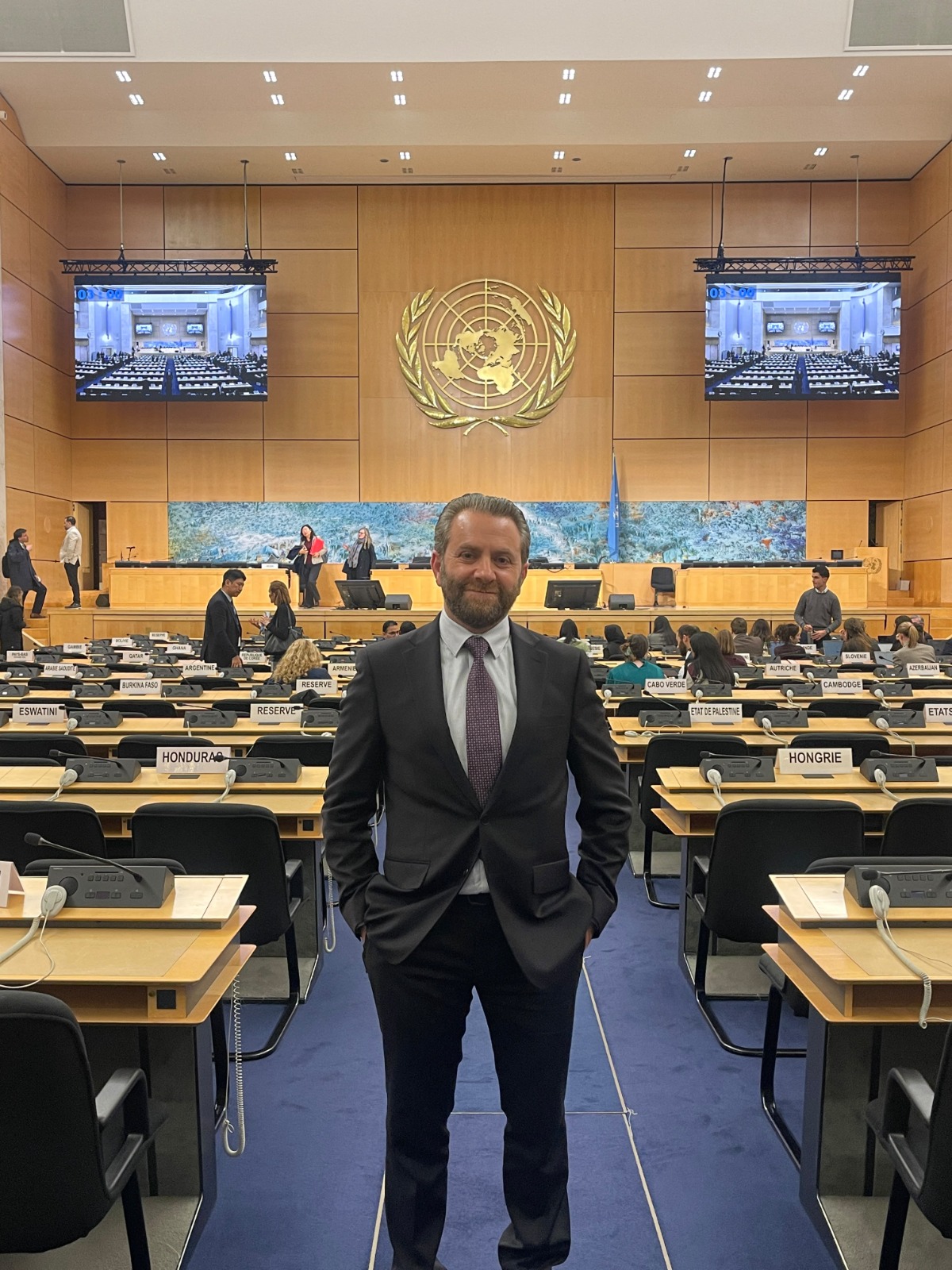
Civil society’s role in this process is to provide documentation of the human rights record of the state under review. Last year, there were 155 reports submitted from the US and this year 60 of those reports were updated when the cycle was extended. The delegation I was with was composed of attorneys, activists, organizers, educators, students, formerly incarcerated people, and others impacted by human rights abuse. In spite of the government’s non-cooperation, we met with many UN human rights officers to report on the worsening conditions in our country: on the murderous boat strikes, the torturous conditions of immigration detention, ICE’s lawlessness in our streets, the cruelty of third-country deportations, the criminalization of abortion access, the repression of the Palestinian solidarity movement, attacks on the press and media freedoms, and the narrowing space for artistic expression, among others.
I shared the stories of our Haitian neighbors in Springfield, Ohio; that kids don’t go to school, the faithful stay home from church, and families rely on mutual aid for food because they have stopped going to the grocery store—all out of fear of being kidnapped by masked agents who operate with impunity. I spoke the name of Pierre Damas Bel, the 20-year-old Wright State University student who committed suicide under the weight of the ankle monitor they strapped to his body.
I served on a side-event panel about the metastasizing framework that weaponizes the “terrorist” label to attack political enemies, or anyone who dares to think or act in opposition to the Administration’s ideology (mirroring the UPR report we submitted). We heard most notably from Dr. Noor Abdalla whose husband, Mahmoud Kahlil, was taken from their home in New York City by ICE in 2025 when she was 8 months pregnant with their first child. Mahmood was a leader at Columbia University’s Palestinian rights movement and was targeted for speaking out against Israel’s genocide in Gaza. According to the Trump administration, advocating for Palestinian liberation is equivalent to supporting terrorists. Noor spoke powerfully about her experience and her husband’s case. She talked about what it was like to give birth with her husband on the phone from a detention facility in Louisiana, how she looks over her shoulder when she walks down the street, and how people online wished her baby would die. It was my highest honor to get to share space with Noor, her light and her truth.
At the panel, I lifted up the movement to Stop Cop City and the domestic terror statute in Georgia that was used to prosecute environmental activists and police abolitionists in Atlanta. I specifically called attention to the five-alarm fire presented by the Attorney General Chris Carr’s indictment filing—a text unhinged from reality and untethered by democratic and human rights norms, yet prophetic about how far the government is willing to go. In it, he advances an extreme and dangerous theory in which the holding of beliefs and opinions—including support for mutual aid or solidarity or anarchism—is itself evidence of domestic terrorism. The repression of Stop Cop City was the blueprint for a strategy that has been expanded and institutionalized by the federal government.
Last September, in an Executive Order, President Trump designated “antifa” as a domestic terrorist organization, despite the fact that there is no “antifa” organization. “Antifa” is short for anti-fascist, which is an idea and a value (a value that this author strongly holds). The Executive Order criminalizes an idea. The first test case of the policy is present in the recent convictions of the Prairieland defendants, some of whom face up to 100 years in prison. At the event, we shared a pre-taped statement from one of the defendants who maintained her fortitude in a striped prison uniform, from a small room with cinder block walls.
Through all the testimony and the information exchange and speeches and meetings, the middling response from the United Nations was anti-climactic and predictable. The Council’s hesitation and the Member States’ silence came from a place of fear because the US bullies and threatens other countries into compliance. Any gesture or signal of friction can provoke intimidation and retaliation. It’s one thing to come at the United States, but if Member States aren’t even going to go to bat for the institution itself, for its principles and purpose, then we can expect it to continue to weaken.
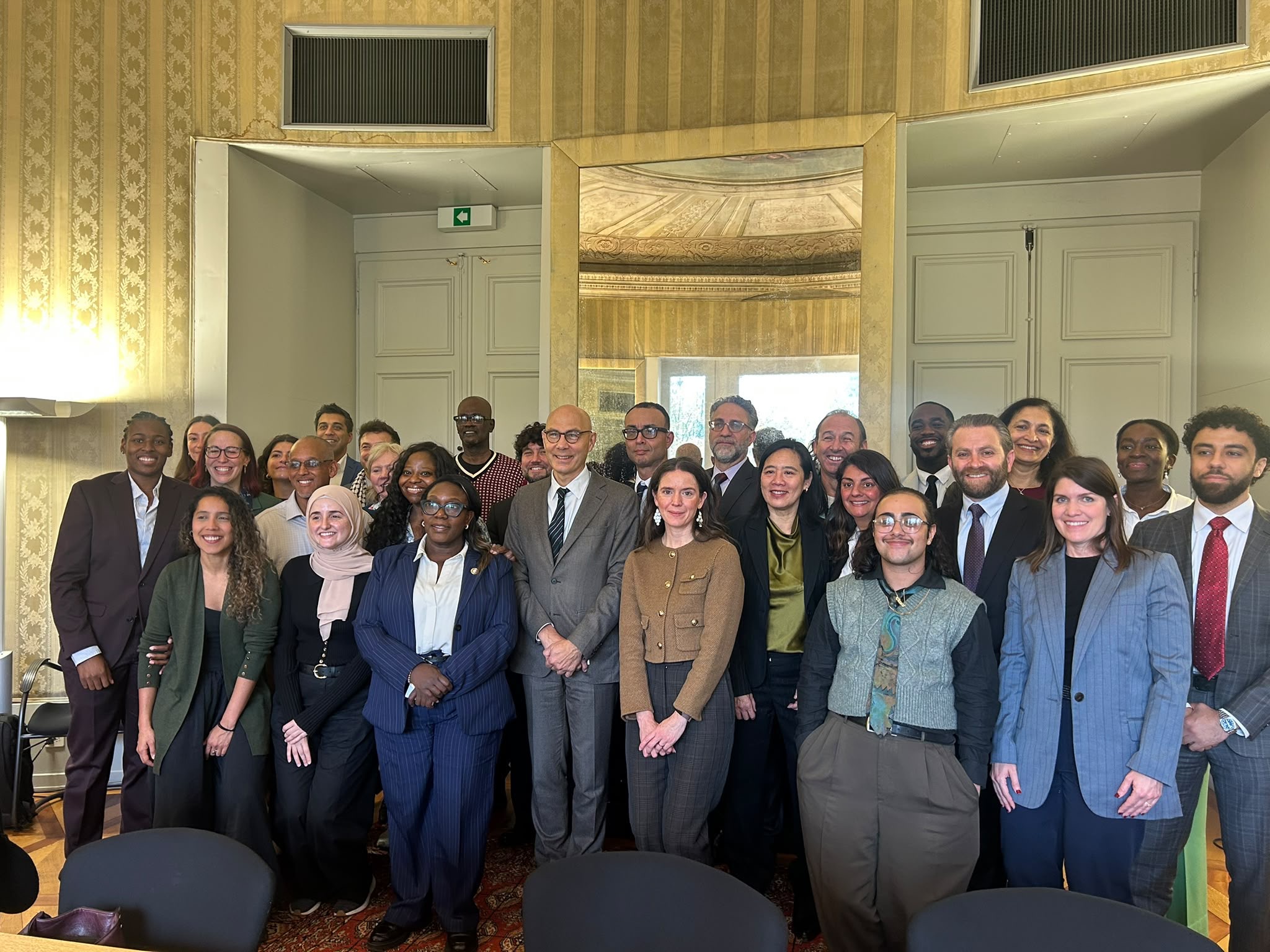
We explored avenues beyond the Council too. Our delegation was granted a closed-door meeting with the UN High Commissioner of Human Rights, Volker Türk. He was gracious and thoughtful, thanked us for our efforts and our courage and told us how important it was that civil society showed up even when our government failed to, out of respect for the process and the institution. In theory, the High Commissioner is freer from the politics that rule in the Council. He and his office operate independently and he has been very outspoken on a range of issues. We called on him to initiate a special inter-session briefing on the human rights crisis in the US, to make a country visit, and to establish quarterly communications with US civil society to stay up to date on developments. His engagement with us was genuine but guarded, though Mr. Türk is in the position to take bold action. He was recently elected to his second and final four-year term and, since the US stopped paying its dues to the Office of the High Commissioner, he is not beholden as the office may have once been. Yet, I did not leave with the clear impression that he would take advantage of this rare moment to reshape human rights politics.
Despite that, in the words of Saleem Holbrook of the Abolitionist Law Center, a leader of our delegation, this result is “disappointing but not frustrating. We’ll be back.” We will continue to fight for human rights protection and accountability in the United States and to insist on raising the expectations we have for international institutions. We believe in the system and we know the world needs the system to function effectively.
We formed a powerful front in Geneva and made a strong showing. I am returning home reinvigorated; doubling-down not shrinking away. Most profoundly, the solidarity and the joy among the delegation members demonstrated for me how beautiful this work can be.
Joel R. Pruce is Director of Applied Research and Learning at the University of Dayton Human Rights Center where he also serves as Associate Professor in the Department of Political Science.