A note from the author:
When I set out to write this blog, I struggled to find an interesting angle on my experience working remotely. It wasn’t for lack of experiences and lessons learned, but I struggled to put into words how I grew from being able to take on an internship without giving up the rest of my summer. Nothing about my summer felt traditional, and a traditional blog would have been a disservice to the experience. So, I bring to you a short commonplace book of pieces that taught, supported, and challenged me throughout my experience working remotely for the Augsburg Peace Transfer Center.
Some of you may be wondering what a commonplace book is. If not, by all means skip this paragraph and enjoy. For those of you wondering, don’t worry; it is not as common an idea as it once was. The idea was introduced to me only a year ago by a professor. It is a collection of anything and everything that the creator finds meaningful or impactful, whether that be photos, quotes, poems, facts, references, recipes. To me, the concept feels somewhere between a scrapbook and a diary. It is another mode of bookkeeping one’s experiences with the world.
June:
A quote from the book that inspired me to research Indigenous violence: “We are the memories we don’t remember, which live in us, which we feel, which make us sing and dance and pray the way we do, feelings from memories that flare and bloom unexpectedly in our lives like blood through a blanket from a wound made by a bullet fired by a man shooting us in the back for our hair, for our heads, for a bounty, or just to get rid of us.” (Tommy Orange, There, There)
Another for good measure: “And don’t make the mistake of calling us resilient. To not have been destroyed, to not have given up, to have survived, is no badge of honor. Would you call an attempted murder victim resilient?” (Tommy Orange, There, There)
Lyric from I Miss the Mountains (Next to Normal): “Everything is balanced here and on an even keel. Everything is perfect. Nothing’s real.”
The reading note that pivoted the lens of my research: Jurisdiction is a large part of the conflict — not just land, but how the Canadian government has delegated between federal and provincial levels (federalism issue)
“It is the mark of an educated mind to be able to entertain a thought without accepting it.” (Aristotle)
The entirety of Olivia Rodrigo’s album: you seem pretty sad for a girl so in love.
“Anyone who says money can’t solve problems has always had money.” (Christina Lauren, Something Wilder)
One of my favorite lines after the first draft of my honors thesis: “In a city plagued with violent crime and gangs, anyone of importance has little attention left for three teenagers walking down the street back to the orphanage they came from. Which is precisely why the acclaimed Purple Gang has trusted them with weekly alcohol distribution and homebrew — at a small scale at least.”
July:
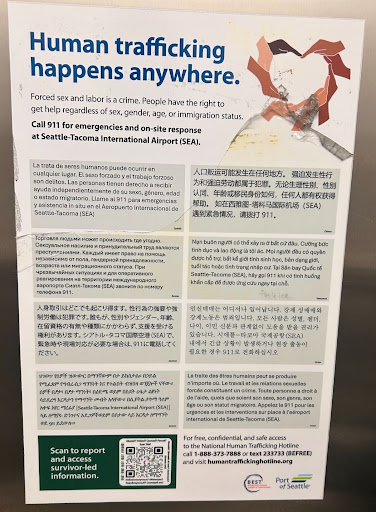
Interaction that narrowed my research topic: Human trafficking informational poster in the Seattle airport
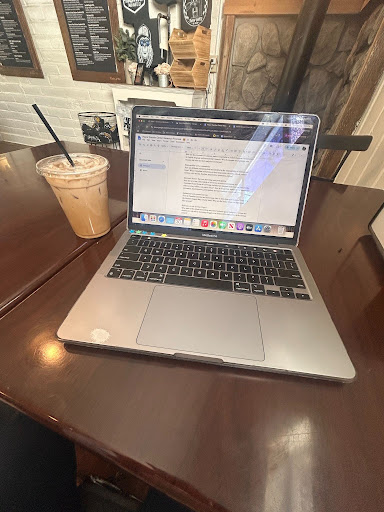
Writing motivation in Local Press Cafe in Twain Harte, California (I had my first coffee at this cafe, it was also a raspberry white mocha like the coffee in this photo)
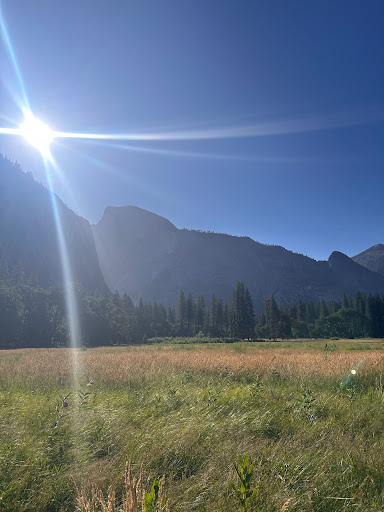
Reconnecting with nature in Yosemite Valley
“A great novel, a truly great one, not only captures a particular fictional experience, it alters and intensifies the way you experience your own life while you’re reading. And it preserves it, like a time capsule.” (Lily King, Heart the Lover)
“Everything is a win when the goal is to experience”
Noted quote that changed my understanding of aufarbeitung: “It is our desire to create awareness of our collective past and to understand where we are at today. So if we are aware of our past and understand each other today, together we can move forward to a better future.” (Sioux Lookout Community Coalition for Healing and Reconciliation, Starting to Talk)
Research note on the MMIWG National Inquiry Letter: So far accomplished: strong national platform/safe space to share truths–as of 2 Mar 2018 11 community hearings, 5 statement gathering events across the country, and 1 expert hearing were held, 763 witnesses were heard from, 134 public hearings, 103 in-camera hearings, 45 artistic expressions, & 276 statements received; live streamed testimony in English & French; increased awareness & public education; working to distribute public recordings broadly & possible primetime programming
August:
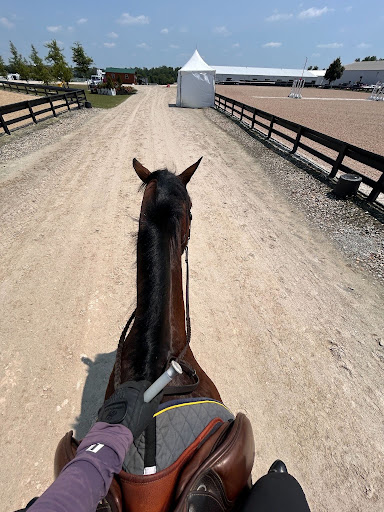
Enjoying a break from work with a horse show
“It’s a privilege to waste time - waste as much of it as you can. On things you love, on things you enjoy, on moments that make you so happy you could burst. And in the end, if you do it right, none of it will have been a waste at all.” (Ashley Poston, The Someday Garden)
“No one can make you feel inferior without your consent” (The Princess Diaries)
“We believe the one who has power. He is the one who gets to write the story. So when you study history, you must ask yourself, Whose story am I missing? Whose voice was suppressed so that this voice could come forth? Once you have figured that out, you must find that story too. From there you get a clearer, yet still imperfect, picture.” (Yaa Gyasi, Homegoing)
Elizabeth Chiasson is in her final year of undergraduate studies at the University of Dayton, working to complete her English and Political Science majors as well as a Pre-Law minor. She has previously worked with the Human Rights Center on projects for Abolition Ohio and the Sounds About Right Podcast.