As I begin to ease into my senior year, I find myself reflecting on my time at the University of Dayton, thinking about all the things I’ve learned and the passions I have gained during my time here. I originally declared my major in sustainability because I loved how interdisciplinary it was, and through my experience in this sector, especially outside of an academic setting, it has certainly proven to be so.
In the Fitz Center for Leadership in Community, I am a Sustainability Student Leader and a Dayton Civic Scholar. This summer I had the opportunity to intern at the National Human Rights Commission in The Gambia through the University of Dayton Human Rights Center. I worked with different departments including legal, programs and communications. The organization's mission is grounded in human rights, including the natural overlap between climate and environmental rights.
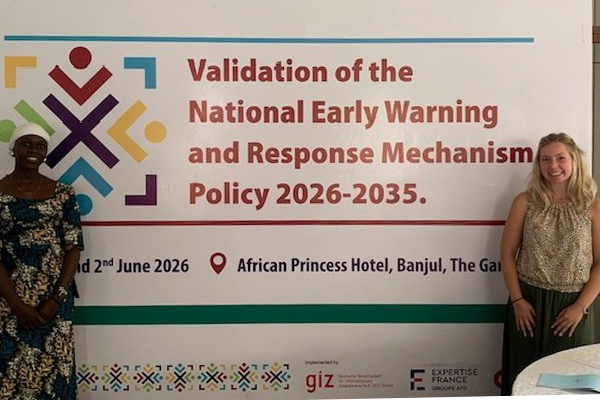
One of my favorite things I got to do this summer was attend and participate in community and stakeholder workshops. The first workshop I attended was on “Early Warning and Response.” The conversation centered around community preparedness for the current increase in natural disasters due to climate change. Globally, The Gambia contributes little to climate change; however, it is experiencing some of the harshest impacts. This sparks conversation among human rights and environmental organizations about the best ways to help communities prepare for an ever-changing climate.
Working with the legal department, I did a smaller-scale research project on regional trends in climate court cases. The legal department already had a strong sense of court cases that ruled in favor of climate action among African courts. To complement this, my research focused on the Inter-American and European courts. The goal of this research was to give members of the National Human Rights Commission greater insight into trends in environmental court cases from around the world. It was also an opportunity to celebrate and learn from the wins that other countries have seen around climate justice.
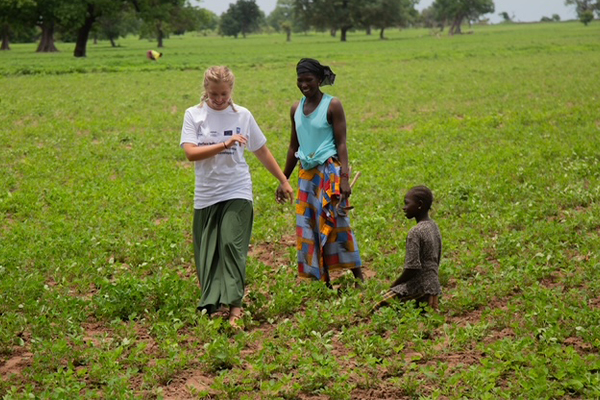 Beyond the projects I worked on, I learned a lot this summer by experiencing a different culture. I had taken classes on concepts such as individualist versus collectivist culture, but experiencing this in person for 10 weeks opened my eyes to the beauty of global differences. There are exceptions, but overall the United States could be considered an individualist culture. As someone who grew up immersed in this culture, I have noticed my thoughts and actions often reflecting these ideals. Sometimes I find myself thinking within a scarcity mindset: If someone gets one thing, it means there is less of that thing for me.
During my time in The Gambia, I experienced the overwhelming kindness of strangers who accepted me into their community and treated me as if I had always been there; I also noticed that the collective was often prioritized over the individual. I have met a lot of people in the U.S. who care about the common good and are community-driven; however, from my experience in The Gambia, I felt as though this was the standard built into most people’s mindset.
Overall, my experience in The Gambia cemented my love for community engagement and development-driven work. From participating in conversations about climate resilience to researching climate-related court cases, I saw how environmental challenges can directly affect people’s rights, livelihoods, and communities. Just as importantly, my time in The Gambia challenged me to think differently about community and the ways we can support one another. As I move into my senior year and begin thinking about what comes next, I am grateful to have had an experience that not only expanded my perspective, but also helped clarify the kind of work I hope to pursue: work that brings people together, responds to community needs and contributes to a more just and sustainable future.