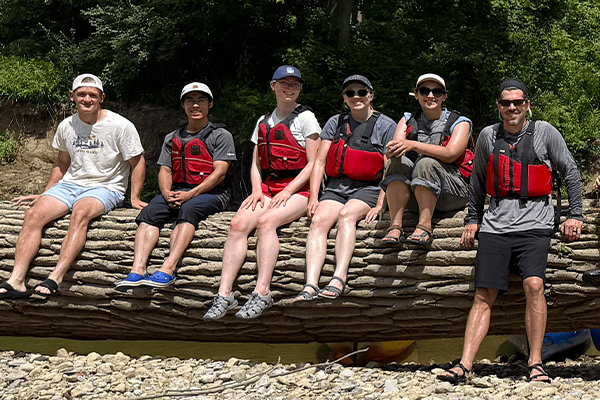
Over the summer, I had the opportunity to work at Five Rivers MetroParks as a sustainability intern. As a junior biology major with a minor in sustainability, I was very excited to explore my academic passions outside of the classroom.
My fellowship began with working closely with the sustainability manager to ensure sustainable operations within the agency. As I gained experience, I spent a great deal of time working with the conservation team out in the field, allowing me to gain a wide variety of professional experience in and out of the office.
The first project I was assigned was conducting an agency-wide waste audit. This project involved analyzing waste generation across all MetroParks facilities to better understand everyday disposal practices regarding compostable material, recyclable material and waste for the landfill.
The findings from the waste audit provided helpful information that will be used to update the agency's next sustainability plan for 2026 to 2031, and I was grateful to be involved in such meaningful work. Participating in this planning process through meetings and discussions allowed me to see how long-term sustainability goals are established in the real world, taking data and restrictions into account to create realistic guidelines that will determine operations in the future.
I also participated in various community outreach events such as Passport to MetroParks at Riverscape. I worked at the waste station to reduce waste at the event and also educate people on proper waste disposal skills, allowing them to be more sustainable in their everyday lives. It was during these moments that I was able to engage with a significant portion of MetroParks’ patrons and fully understand the importance of the agency’s work.
On top of sustainability planning in the office, I spent a significant amount of time working with the conservation team out in the field. Our largest project, which spanned the entire summer, was cover mapping the entirety of the Twin Creek Conservation Area. Cover mapping was carried out using Geographic Information Systems (GIS) to track and analyze the growth of various invasive species in the area, including honeysuckle, autumn olive and tree of heaven.
This data ultimately served to help the MetroParks conservation managers create an appropriate management plan for Twin Creeks and effectively protect the area’s native ecological balance. Overall, this project honed my invasive and native species identification skills along with technical GIS software skills.
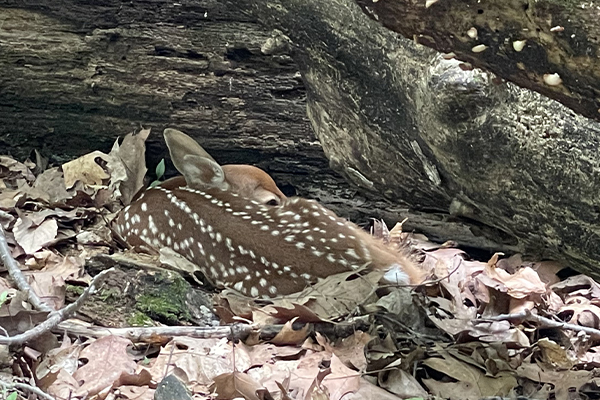 One of the most impactful projects I participated in was conducting grassland assessments in various MetroParks-owned prairies in Montgomery County. Working again with the conservation team, I visited numerous protected prairies to evaluate habitat quality and assess the density and types of plant species.
Using GIS mapping along with quadrat sampling and transect sampling, I was able to gather data and grade prairies based on their native and invasive species composition and ratios. The collected data was then analyzed by conservation managers to produce comprehensive reports on the effectiveness of different prairie management strategies. The information collected from these assessments will help guide future conservation and management efforts and may also provide data for future university research.
What surprised me the most during this experience was just how multidimensional the MetroPark’s conservation efforts are. Before this summer, I pictured invasive management as simply cutting down invasive plants, something rather straightforward. However, after being part of the conservation team, I realized MetroParks staff does far more than that. Cover mapping, burns and bat boxes are just some of the techniques that MetroParks employs to conserve nature in Montgomery County.
Overall, my time at Five Rivers MetroParks was invaluable and greatly strengthened my interest in pursuing a career focused on sustainability and conservation. In addition to developing a wide range of practical skills, I gained hands-on experience working on conservation and sustainability initiatives, which deepened my understanding of both fields beyond what I had learned in the classroom. Moving forward, I am excited to put my skills into action and help build a more sustainable future where people and nature can thrive together.