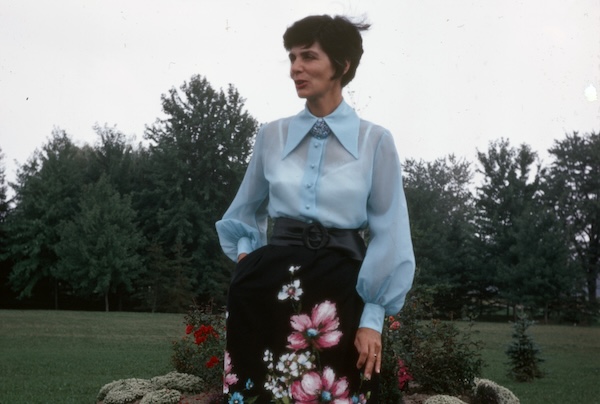
Art doesn’t have to hang in a gallery to be art. My late mother taught me that important lesson.
She also taught me to recognize and celebrate the gifts in others. That’s why I wanted to honor her.
My mom would have been embarrassed — no, mortified — to learn that I used the gallery walls in the president’s residence to exhibit the many ways she expressed her creativity: watercolor and oil paintings, pastel and charcoal drawings, hand-painted china, and even a remarkable mosaic table.
The range of her work told a story of a woman whose creativity knew few boundaries. As her incredibly proud son, I was privileged to tell it through a solo exhibition titled Dorie: She Made Beauty and Released It. Over six weeks, the exhibition welcomed appreciative visitors from across the University and beyond — from Flyer Promise students and members of the local arts community to Black theologians and new trustees.
Each piece offered a glimpse into the imagination of a gifted artist whose life ended too soon. More than four decades ago, she died of leukemia at 51, just months after the diagnosis.
For those who knew my mom, art seemed to have been less an “activity” than a way of inhabiting the world. After earning bachelor’s and master’s degrees in art education from Buffalo State College, she taught art in area schools. However, while raising a family, bringing out the artistic talents of school children, and volunteering at our church, there were long stretches when she scarcely painted at all.
Still, she saw possibilities everywhere. In one watercolor painting, she captured the intensity of sunlight striking autumn leaves on a German plum tree in a neighbor’s yard. She created a multicolored mosaic featuring a wonderfully modern, Picasso-style guitar for a cocktail table. She also imagined enormous liturgical banners that would suspend from the vaulted ceiling of St. Joseph's University Heights Church in Buffalo.
My mom noticed composition, color, placement, light, and the relationship of one object to another. That’s why her cousin, Father Paul Valente, instinctively moved a rose from the center to the side of the altar before her funeral. He knew she hated symmetry. To her, art was about freedom, not orderliness.
She was original, too, just like her art. She had a sense of style in the way she dressed. She laughed often and loved using exclamation points in handwritten notes. In our family’s eyes, she was sophisticated and elegant.
All of these qualities came together in her belated first solo exhibit, which included pieces I gathered from the homes of family and friends scattered across the country. Her art hadn’t come from museums or collections, but from the walls of people who treasured it.
Perhaps that’s the lasting value of great art.