As the United States celebrates its 250th birthday, I find myself wondering something our Founding Fathers probably didn't expect us to revisit: if America were choosing a mascot today, would the bald eagle still win? We have so much more information available now than in 1782, when that national symbol was first identified.
As the United States celebrates its 250th birthday, I find myself wondering something our Founding Fathers probably didn't expect us to revisit: if America were choosing a mascot today, would the bald eagle still win? Back when the Continental Congress chose this symbol of strength, freedom and self-sufficiency, the panel that could vote was made up entirely of white men. I'm not suggesting they did anything wrong, but new times demand better representation of all people. How might that vote look today?
First on the ballot is the turkey.
Benjamin Franklin famously called the turkey a "bird of courage" in a letter to his daughter, his personal choice to represent the USA. The turkey didn't get the votes last time, but perhaps its popularity has grown since.
The word "turkey" has entered our lexicon in plenty of ways, and not always flattering. Three strikes in bowling is called a turkey. So is a bad movie, like Howard the Duck. When we quit a bad habit, we go "cold turkey." When talk turns serious, it's time to "talk turkey." Most people remember the infamous WKRP in Cincinnati turkey drop of 1978, when live turkeys were dropped from a helicopter as the station manager declared, "As God is my witness, I thought turkeys could fly." They could not.
Consider that 46 million turkeys are eaten every Thanksgiving, with little homage paid to Franklin's admiration for the bird. Since 1989, the sitting president has pardoned two turkeys each year, two out of 46 million. That's not exactly a strong image for a potential national symbol.
Next, the incumbent: the bald eagle.
Our Founding Fathers picked it as the emblem of the nation. It's on our money, our passports, our military insignia, our flags. It screams American patriotism. These are tough birds; they were on the endangered species list for almost 30 years, from 1978 until their population dwindled to just 500 nesting pairs. Since then, the bald eagle has rebounded to an estimated 316,700 individuals, including more than 71,000 nesting pairs.
The eagle also enjoys linguistic familiarity. You can be eagle-eyed or fly like an eagle. It's hard to forget Neil Armstrong's words as Apollo 11 touched down on the moon in 1969: "Houston, Tranquility Base here. The Eagle has landed." And the nearly perfect "eagle" in golf scoring deserves an honorable mention, too.
There's just one problem: the bald eagle isn't actually bald. Pedantic, I know, but the term is misleading, which means our national bird has a branding issue of its own. That might matter in 2026, as we approach a vote that increasingly rewards clarity over nuance.
I propose adding a third candidate to the ticket, one who wasn't around when the Founding Fathers made their choice, and who could bring some fresh thinking. In marketing, we rebrand all the time to stay relevant. Here's my nomination: Big Bird.
Big Bird is a 6½-year-old, 8-foot-2-inch yellow canary known for his pivotal role on Sesame Street since 1969. He's curious, talented — he can roller skate, write poetry, ask great questions and is always learning alongside us. In 1971, he introduced an imaginary friend, Mr. Snuffleupagus, whom no adult could see for 14 years. Despite that invisibility, Big Bird never wavered; he simply kept believing, and eventually, everyone else believed too. In 1983, Big Bird taught us about grief when Mr. Hooper died, groundbreaking television at the time. In 1985, he became a movie star in Follow That Bird.
In 1990, while pursuing my doctorate at Temple University, I completed a sport management internship not with a pro team, but at Sesame Place in Langhorne, Pennsylvania. It taught me that live entertainment, parades, character meet-and-greets, crowd logistics, has as much to do with hospitality as any ballpark. I even learned Big Bird's costume cost about $25,000 then (closer to $50,000 today), which is why he traveled with a security detail rivaling the Secret Service.
Big Bird would make a fitting symbol of what America needs: kindness, curiosity, and resilience, even if hugging him remains off-limits.
The real question isn't whether the eagle should be replaced, but what symbol we'd choose if starting fresh. The turkey has history. The eagle has legacy. But Big Bird has something uniquely American: optimism and the ability to bring people together across generations. Sometimes strength doesn't arrive with talons extended, sometimes it shows up in yellow feathers, asking questions and helping us find our way.
— Peter Titlebaum
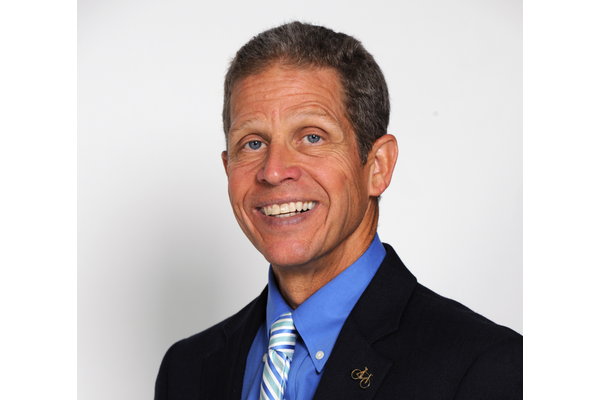
Peter Titlebaum has spent the past 30 years at the University of Dayton, where he teaches sport management. He builds his teaching around the lessons others once shared with him and passes them on to his students. The most important of those is to step outside your comfort zone and discover you're capable of something bigger than yourself. It's a spirit Big Bird has embodied on Sesame Street for more than 50 years, which may be why he feels like such a natural national symbol.