In the 1920s, at 20 rue Jacob on the Left Bank of Paris, a woman from Dayton, Ohio, was doing something deceptively simple: she was putting people in a room together. Natalie Clifford Barney — writer, memoirist, unapologetic lesbian, and one of the great connectors of the twentieth century — hosted a Friday salon that ran for more than sixty years at her home. Poets sat next to philosophers. Critics argued with artists. The wayward, lost, and creative of the world found each other. There was no agenda, no syllabus. Just people, thinking out loud, in the same room.
A century later, we find ourselves in an era that has mastered the simulation of connection. We have more tools for communication than any generation in history, and yet the simple act of sitting in a room with other people, listening, disagreeing, being surprised, being honest, feels like a lost art.
In the Same Room is a year-long series of events that takes the salon as both historical subject and living practice. We kick off the year with a 150th birthday party for Natalie Clifford Barney on Oct. 30, 2026 (and yes, there will be cake). In partnership with the Dayton Metro Library, and the Dayton LGBT Center, UD will host a traveling exhibition of works from the library's Natalie Barney Collection and welcome translator, Suzanne Stroh to read from her recent translation of Barney. The year builds toward a mini residency by Hanif Abdurraqib on March 11–12, 2027, bringing to campus a writer whose work across poetry, criticism, and memoir consistently explores how we live, grow, grieve and love together sharing space, sound, and community.
Between and around these anchor events, we'll host a series of gatherings designed to do what Barney's salon did best — put people from different disciplines and different backgrounds in the same room and see what happens. Some will be structured. Some won't. All of them will proceed from a conviction that the humanities are not a body of knowledge to be transmitted but a set of practices best performed together, in person and in real time.
This is not nostalgia for the Paris of the 1920s. It is a vision for the humanities of the future — an argument about what they are for. The Humanities are not just a set of texts, but the salon reminds us that the humanities is more importantly a set of practices: reading together, listening together, disagreeing together, being changed together.
Natalie Clifford Barney's 150th Birthday Salons
Join us in celebrating the life of Dayton-born salon hostess and writer, Natalie Clifford Barney!
Friday, Oct. 30, 2026 4:00 PM to 6:00 PM
KU Torch Lounge, University of Dayton
On the eve of her 150th Birthday, join the University of Dayton, in partnership with the Dayton Metro Library, and the Dayton LGBT Center, for an exhibition of works from the DML library’s Natalie Barney Collection and welcome translator Suzanne Stroh to read from her recent translation of Barney at a birthday reception. Yes, there will be cake and celebratory beverages! RSVP with this form.
Interested in hosting your own salon? Complete this form to express interest in hosting.
Previous Events in this Series
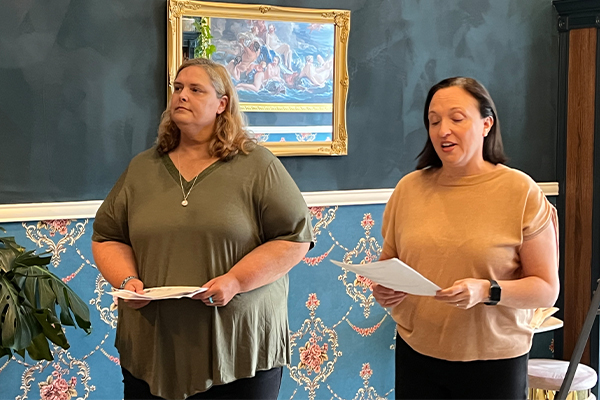
- The Barney Salon on the Patio: This patio party at Wayne and Clover honored the 150th birthday of Natalie Clifford Barney, Dayton's own legendary lesbian writer, memoirist and salon hostess whose weekly Friday gatherings at her Paris home drew the likes of Colette, Gertrude Stein, Djuna Barnes and Ezra Pound. Barney is commemorated with an Ohio Historical Marker in Cooper Park, one of only a handful in the state dedicated to LGBTQ+ history, now joined by a Rubi Girls marker here at Wayne and Clover.
- A Barney Salon at Swoon: This event was a Belle Époque salon in honor of Dayton's original romance writer, Natalie Clifford Barney, the legendary lesbian writer, memoirist and salon hostess whose weekly Friday gatherings at her Paris home drew the likes of Colette, Gertrude Stein, Djuna Barnes and Ezra Pound.