Patriotism, protest and a playlist between
For 250 years, the story of America has been told in song — through moments of hardship and triumph alike. Music reflects the spirit of each era, amplifying the voices of those often unheard, especially when the promise of freedom has not been equal.
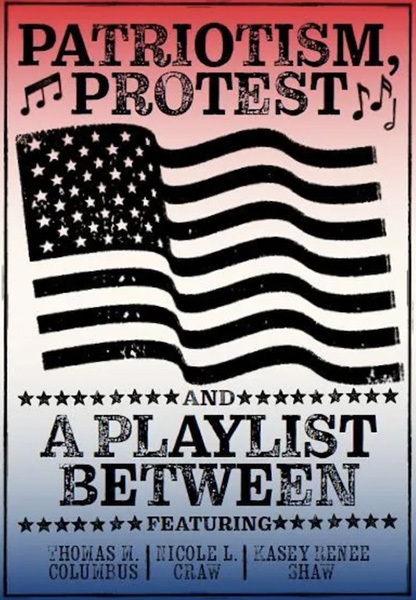
In this issue, we asked several community members for songs that embody the spirit of the Declaration of Independence for the feature “We Declare: America at 250” [Page 20]. We discussed at our editorial meetings patriotism, protest and the tides we have seen turn in America in the last decade.
This inevitably led to asking ourselves what songs resonated with us.
Editor emeritus Tom Columbus, managing editor Kasey Renee Shaw and myself wanted to share a few with you:
A TRIUMPH
Marvin Gaye’s 1971 album What’s Going On is the best record that almost never happened. Motown Records, Gaye’s label, refused to touch it — the demos weren’t commercial enough, too political and meandering, far too risky for the white audience they were determined not to alienate. So, Gaye built it himself, literally underground, in Berry Gordy’s dirt‑floor basement.
Out of that unlikely space arrived a triumph: a record that weaves lush instrumentation, multi-layered vocals smooth as honey and the sounds of the city stitched into a story that feels startlingly relevant — topically, sonically, spiritually — half a century later.
Gaye walks straight into the political, social and personal grief of the late ’60s and early ’70s — Vietnam, police brutality, environmental issues, systemic racism, to name a few — and refuses to flinch. Yet somehow, inside all that grief, he makes space for hope. For tenderness. For celebration. And he pulls it off.
I didn’t have the language at the time, but I understood that familiar human ache: the world is broken, and still, we’re asked to care for one another. I believed Gaye then, that this world was possible.
Maybe that’s why this record found me so young, and why it stayed; I was a white 9-year-old girl from Springfield, Ohio — a city with its own complicated past, still trembling in the shadow of post‑industry — riding in the backseat of my dad’s red ’90 Honda Accord. I didn’t have the language at the time, but I understood that familiar human ache: the world is broken, and still, we’re asked to care for one another. I believed Gaye then, that this world was possible. Now, at age 30, I still do.
The insistence that empathy is non‑negotiable, even radical, reverberates across identity, geography and generations. It’s what makes the album endure. And it’s what keeps me coming back, listening for what’s going on, for the world Gaye dared to hope we’d build. — Kasey Renee Shaw
GIVE ME AN ANTHEM
Having often in the 1950s watched the Friday Night Fights with my grandmother, I will always associate our official national anthem with the jingle for Gillette Blue Blades. I could develop observations about our country’s blend of patriotism and professional sports; I don’t want to. The memories are personal.
So are those of hearing “The Star-Spangled Banner” played in old Cleveland Municipal Stadium before Indians games. Stadium lights shining on a brilliant green baseball field as we stood for the anthem is quintessentially American. I grew up with Chief Wahoo as my friend, so I say “Indians.” Louis Sockalexis attended the same college I did. A member of what was called the Penobscot Indian Nation, he became a teammate of Cy Young and lived a glorious and sad life, remembered now mostly in acrimonious debate over the naming of sports teams. I also say Guardians; I grew up near the Cleveland bridge where those imposing statues stand as monuments to century-old American optimism.
America, our home, is a big tent.
Among unofficial anthems, I find Woody Guthrie’s “This Land is Your Land” stirring. He supposedly wrote it partly in protest of Irving Berlin’s “God Bless America,” which Guthrie found sappy. But Berlin’s song also stirs me. America, our home, is a big tent. Musically it is a tent encompassing jazz and blues and R&B — and Ray Charles. Stirring, too, is listening to him sing “O beautiful for heroes proved / In liberating strife, / Who more than self / their country loved /And mercy more than life! / America! America!” — Thomas M. Columbus
BALLAD OF THE GULF
“God Bless the U.S.A.” by Lee Greenwood is seriously an awful song. Lyrically, it’s mundane and simplistic; a tired trope conflating patriotism with religious righteousness. It reduces national pride to a kind of easy, performative sentiment.
Greenwood debuted “God Bless the U.S.A.” in 1984, writing it in response to Korean Airlines Flight 007 being shot down over Soviet airspace, killing everyone aboard. Greenwood said that as Americans, “we just need to be more united.”
But it really gained popularity after the start of the Gulf War in 1990, when I first heard it as a kindergartner.
I remember one specific day listening to this song that sticks out in my mind — when my dad came back from Operation Desert Storm. I don’t remember much about the day, what month it was or even putting on the frilly dress and giant hair bow my mom made me wear. But I knew my dad was coming home.
My Grandpa Joe was driving, my mom in the passenger seat, which meant my grandmother must’ve been in the backseat with me, 5, and my sister, 2. We were in a long line of traffic as the song played on the radio.
The songs we carry — protest, praise or something in between — reveal not just who we are as Americans, but who we’re still trying to become. If there’s anything the last 250 years of music tells us, it’s that the American story is not finished.
We arrived at an air hangar someplace and joined the crowd of women and children holding “Welcome home!” signs and bouquets of flowers. “God Bless the U.S.A.” played on the loudspeakers as the cargo plane pulled up and soldiers in their tan and brown camouflage fatigues started descending the steps. I caught a glimpse of my dad, his skin a crisp golden brown from weeks spent in the desert sun. Even at 5 years old, I somehow understood the significance of the moment and was overwhelmed with tears.
For a song that was originally written to unite Americans, I find it ironic to be talking about it in 2026, when the U.S. is possibly the most divided it’s been since the Civil War. But maybe that’s the point. The songs we carry — protest, praise or something in between — reveal not just who we are as Americans, but who we’re still trying to become. If there’s anything the last 250 years of music tells us, it’s that the American story is not finished — only sung, again and again, in search of a better chorus. — Nicole L. Craw
Explore UD Magazine's America 250 playlist on Youtube.
A version of this article appears in print in the Summer 2026 University of Dayton Magazine, Page 26. EXPLORE THE ISSUE — MORE ONLINE