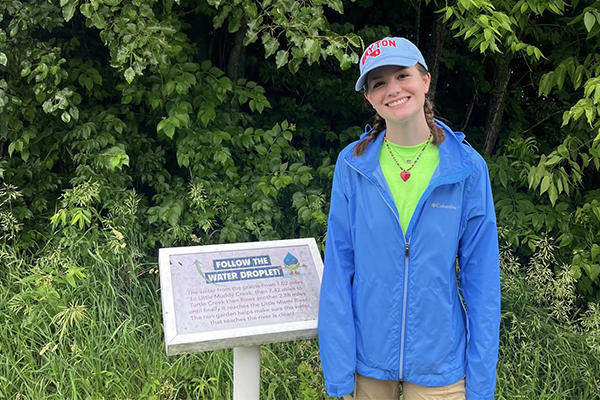
This summer, I had the wonderful opportunity to work for the Warren County Soil and Water Conservation District. As a senior sustainability major, I’ve always been passionate about protecting water resources and this internship allowed me to explore that interest through hands-on experiential learning.
Soil and Water Conservation Districts (SWCD) were established in response to the Dust Bowl in the 1930s and have since expanded their work to address broader environmental challenges, including watershed protection and stormwater management. Today, Soil and Water Conservation Districts partner with the Natural Resources Conservation Service, state departments of agriculture, local landowners, and other local governments and community partners to promote soil health, sustainable watershed management and urban conservation.
My primary responsibility this summer with the Warren County SWCD was to support MS4 permitting and initiatives. MS4s, or Municipal Separate Storm Sewer Systems, are publicly owned networks of stormwater infrastructure like gutters, ditches, basins and outfalls, which collect and convey stormwater runoff directly into local river and lake systems.
Because this runoff generally enters local waterways without being treated, MS4s are regulated under the Environmental Protection Agency through the National Pollutant Discharge Elimination System. Through this system, SWCDs and MS4 operators support six minimum control measures:
- Public education and outreach
- Public involvement and participation
- Illicit discharge detection and elimination
- Construction site stormwater runoff control
- Post-construction stormwater management
- Pollution prevention and municipal “good housekeeping”
I supported all of these minimum control measures to some degree during my time with Warren County, but I spent most of my time on measures 1, 3 and 5.
Post-construction stormwater management (MCM 5) took the form of inspecting stormwater detention basins and retention ponds. Along with three other interns, I ensured the basins were functioning properly by checking for excessive vegetation, algae growth, cracks or breaks in any structures or debris inhibiting the flow of water.
Illicit discharge detection and elimination (MCM 3) was a similar process that involved inspections of stormwater outfalls, which discharge water directly into streams or rivers. In these cases, we looked for colors, odors, debris or flows where there shouldn’t be. If that was the case, it indicated runoff that wasn’t the result of stormwater. If something seemed off, we would conduct further testing to determine the extent of illicit discharges and what steps were needed to address the discharge.
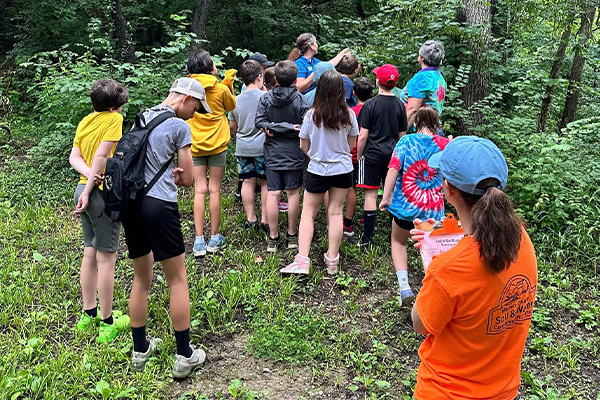 Finally, I was able to spend a lot of time this summer working with public education and outreach (MCM 1). I helped facilitate multiple events for young children to expose them to the world of environmentalism and help them become comfortable in nature. We also led kayak floats, macroinvertebrate exploration events, informational community meetings and more.
Essentially, the goal of all these programs was engaging Warren County residents in the outdoors and interacting with the natural environment.
This was a great opportunity to apply the skills and knowledge that I have gained through the Sustainability Student Leaders program. As a member of the Education Team and a Student Director of Community Engagement, I have had many opportunities to lead public outreach and environmental education events. This includes organizing volunteering opportunities, sustainability dialogues, participating in community-wide events and creating interactive workshops to teach students about sustainability.
Through the Sustainability Student Leaders program, I learned how my passion for community engagement could apply to different types of positions, including this internship. With this experience leading into my internship, I felt confident in my ability to lead community outreach events and effectively communicate sustainability to residents of all ages and backgrounds.
This internship demonstrated the importance of approaching conservation from both a technical perspective and through community engagement. I am grateful to have had the opportunity to explore my passions for water resources and community engagement while learning so much about the history of conservation and how I can continue to explore conservation in the future.