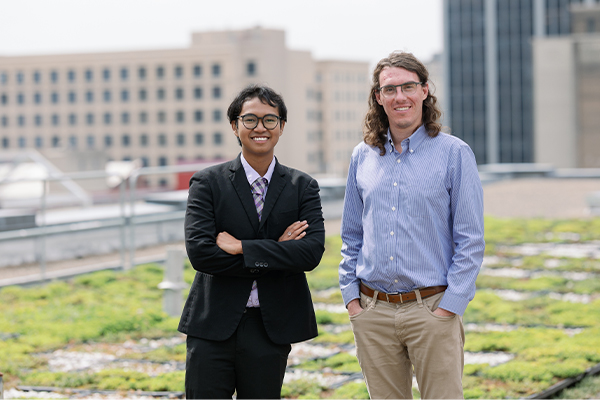
When I first chose to study finance and business analytics at the University of Dayton, I knew I enjoyed working with numbers and making sense of data, but I did not yet know where those skills would take me. I’ve always believed that business can play a meaningful role in creating positive change, but I was still figuring out what that could look like in practice. I did not expect that one of the answers would come from something as fundamental and as complex as energy.
This summer, through the undergraduate Sustainability Fellowship program, I had the opportunity to serve as an Energy Fellow with the City of Dayton Office of Sustainability, working alongside Special Projects Administrator Matthew Worsham and Sustainability Manager Meg Maloney, both University of Dayton alumni. Learning from two Flyers who once walked the same campus as I do and are now making an impact in the Dayton community made the experience so meaningful. More than anything, this fellowship gave me the chance to step outside the classroom and apply my academic experiences to challenges within the city where I attend college.
What surprised me most was how naturally my business education fit into the work of energy and sustainability within the public sector. Working with the City of Dayton showed me how closely financial decisions, data, energy and sustainability are connected, and how business knowledge can be part of addressing challenges that affect an entire community. For the first time, I could see a clearer connection between what I was studying, what I cared about, and the kind of impact I wanted my work to have.
Turning Data Into Decisions: Forecasting Electricity Demand
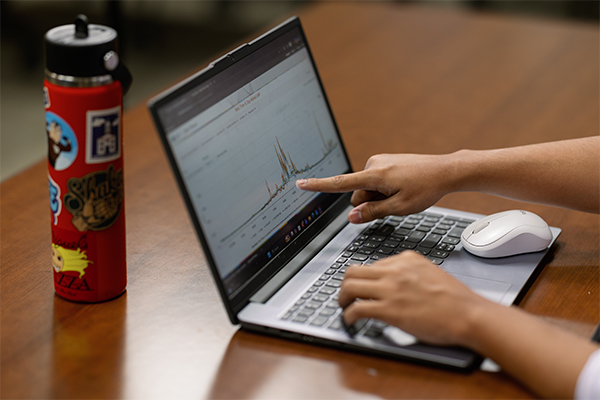 One of the first projects that helped me see that connection was forecasting electricity demand. Electricity costs can rise significantly during periods of high demand, making it important for the city to understand when those periods are likely to occur. Using what I had learned in my coding class, I developed four forecasting models to help identify upcoming peak demand days and hours and record them.
What made this project meaningful to me was seeing how data could directly inform a practical decision. By anticipating periods of high demand, the city can make informed decisions about when to reduce electricity consumption, helping lower costs while also reducing strain on the grid. The model provides the city with a tool to manage its energy use more efficiently and save money.
More than anything, this project changed how I think about analytics. I enjoy working with data, but I have become much more interested in what happens after the analysis is finished. The numbers themselves are only part of the story, and I now know that what matters is how they can help make a better decision.
Measuring Impact: Building Dayton’s Greenhouse Gas Inventory
My work with the city’s greenhouse gas inventory gave me a different perspective on the role of data. As Dayton prepares for its next 10-year sustainability plan, understanding the city's current emissions is an important part of determining effective reduction targets and strategies.
With the guidance of external partners from UNPREDICTABLEcity, I worked with data from across city operations to help build an updated greenhouse gas inventory. As I worked through the data, I began to see how each piece contributed to a larger picture of the city’s operations and environmental impact. It gave me a better understanding of where emissions were coming from and where there may be opportunities for meaningful reductions.
The experience also showed me how important a strong baseline is when working toward long-term sustainability goals. Having a clear picture of the city’s current emissions gives decision-makers a foundation for determining priorities and tracking progress over time. This was another example of how the analytical skills I was developing could contribute to work with a much broader purpose.
Understanding the Cost of Certainty: Energy Procurement and Risk
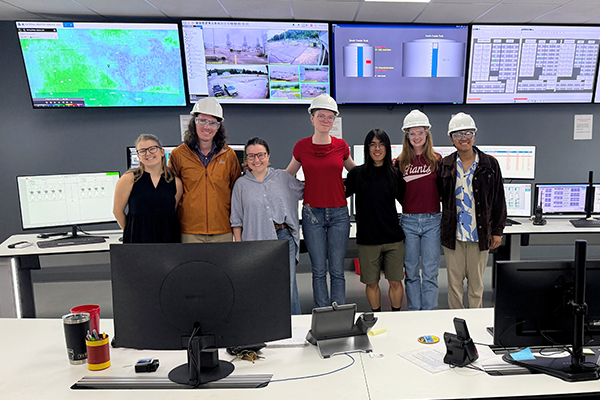 My finance background came into play more directly through the city's energy procurement strategy. Energy prices can fluctuate, so local governments must decide how much market risk they are willing to take and how much they are willing to pay for a slightly greater price certainty. I had learned about risk and financial decision-making in the classroom, but this was my first opportunity to see those concepts applied to something a city cannot simply choose to do without.
Unlike investing, where you can decide not to buy a particular stock, a city still needs electricity to operate its buildings, facilities and services. The question is not whether to participate in the energy market, but how to manage the cost and risk that come with something the city depends on every day. That made the financial decisions behind energy procurement feel much more consequential.
Working with external partners at IGS, I analyzed the city's historical energy costs and examined the tradeoffs between different approaches to energy purchasing. I also developed an internal guide to help explain energy hedging and contributed to recommendations for the city's 2027 procurement strategy.
What I appreciated most was seeing finance from a different perspective. Financial decisions can sometimes seem separate from the people and communities they ultimately impact. Here, finance became a way to think carefully about how a city manages its resources, navigates uncertainty and makes decisions that support the community it serves.
Finding Purpose in the Intersection
Across these projects, I began to understand something I had been struggling to put into words: I do not want to choose between business and sustainability. Instead, I want to find the places where they intersect.
Before this summer, I knew I enjoyed my majors and wanted my work to have a purpose beyond simply generating financial results. My experience with the City of Dayton helped make that connection much clearer. Energy is a field where financial decisions, data, environmental outcomes and community needs come together. It showed me that the skills I am developing through my business education can be directly applied to challenges that extend beyond the organizational level.
As I head into my senior year at the University of Dayton, I am leaving this experience with a clearer sense of what I want my education to lead toward. Whether that eventually takes me into fields like sustainable investing and community development finance, I want to use business as a tool for creating long-term value for both organizations and the communities they serve.
The most important thing I gained from this summer was not another technical skill or another line on my resume. It was a better understanding of why I am studying what I study. I left this fellowship with a clearer idea of what purpose looks like for me and the kind of work I want to pursue. The experience gave me a chance to see how the things I enjoy can contribute to work that has a positive impact beyond myself.
For me, that is where purpose begins: not in choosing between business and sustainability, but in finding ways to use one to advance the other.