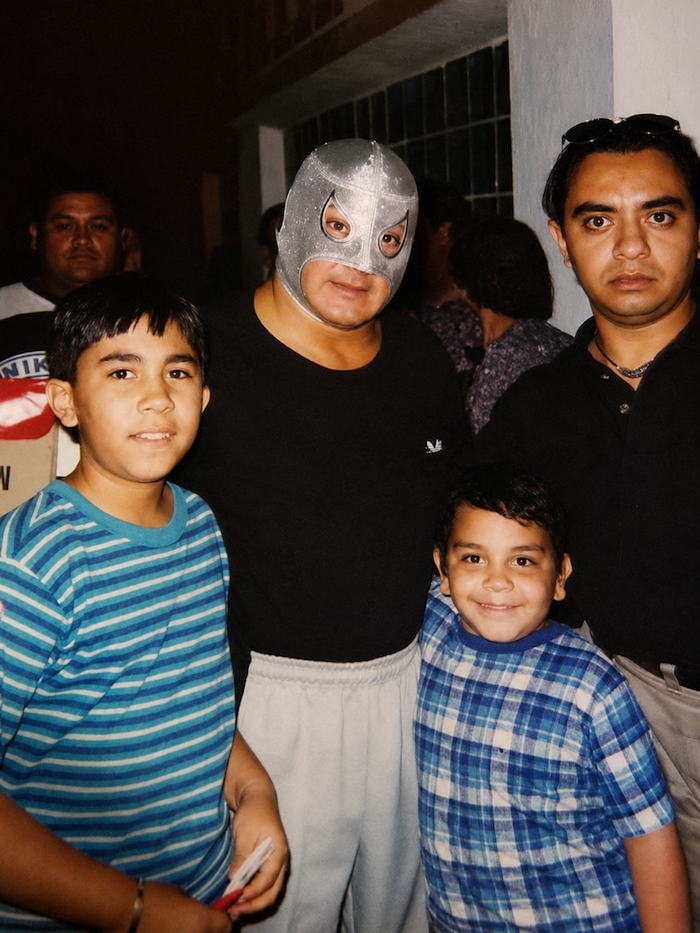
And the winner is… El Santo! The silver masked man!
As soon as his entrance song came on, there was no need for the announcer to say his name. The people in the arena already knew that the wrestler considered by many to be the greatest of all time was about to enter. I can still remember everything… crossing the international bridge from El Paso, Texas, to Ciudad Juárez, Chihuahua, Mexico, with my brothers to go see lucha libre wrestling; walking through the streets of downtown Juarez, the smell of the food stands, the vendors inside the gymnasium, the DJ playing music, the arena filled with families enjoying the show, and lucha libre masks that were being sold in every corner. Every time, my oldest brother would look for the best ones and would buy masks of wrestlers that we didn’t have.
I never really stopped to think about why a wrestler might be named El Santo, or El Sagrado, for example. But one thing I was certain of was that everyone admired them. After all, Lucha libre is an iconic element of the Mexican culture and was declared a cultural heritage in 2018. Even movies like Nacho Libre are based on real stories, such as that of the priest and wrestler Fray Tormenta.
As I grew older and reflected on this more deeply, I began to think about the close connection between my Hispanic/Latino cultural heritage, faith, and my relationship with God. Over the years, I came to understand why the name El Santo had never surprised me. I grew up in a culture where the sacred appears in the most ordinary places. El Santo is an example of this. El Santo is not simply a childhood memory; rather, it precisely reflects the way in which faith is intertwined with life.
Our faith is not limited to devotional practices; it takes flesh in our everyday lives. It becomes visible in lucha libre, in a blessing given before leaving the house, or even in the way we speak. Our faith is both devotional and incarnational. It is embodied not only in the physical way in which we live out our religious beliefs, but also in the ways we express them and in society around us. This is why there can be famous wrestlers whose names refer to faith. In Mexico, as in many countries throughout Latin America, and in many neighborhoods across the United States where large Hispanic/Latino communities live in, we find what I call Barrio Theology.
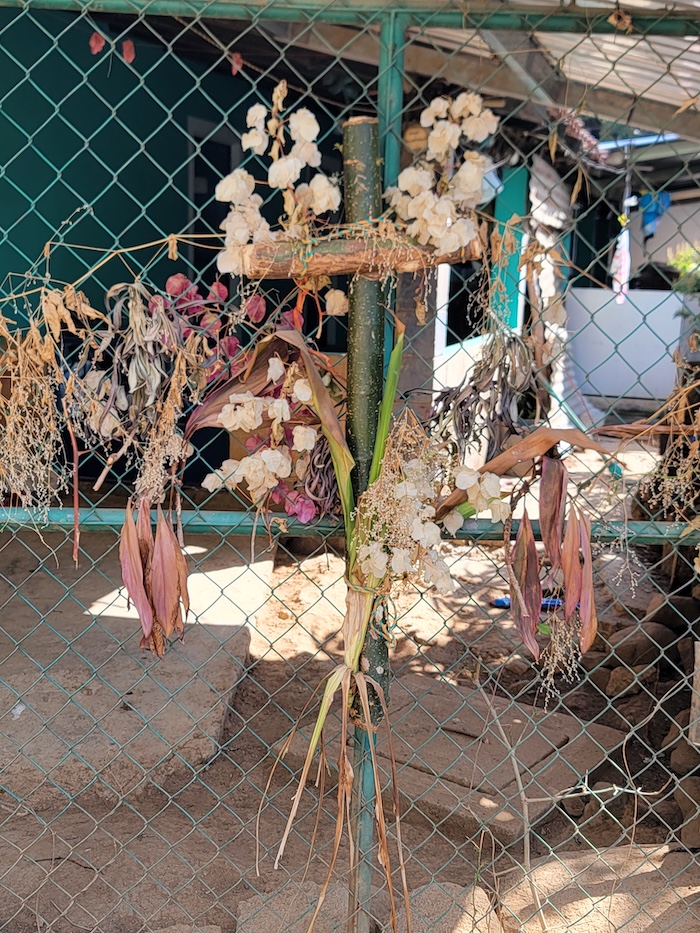
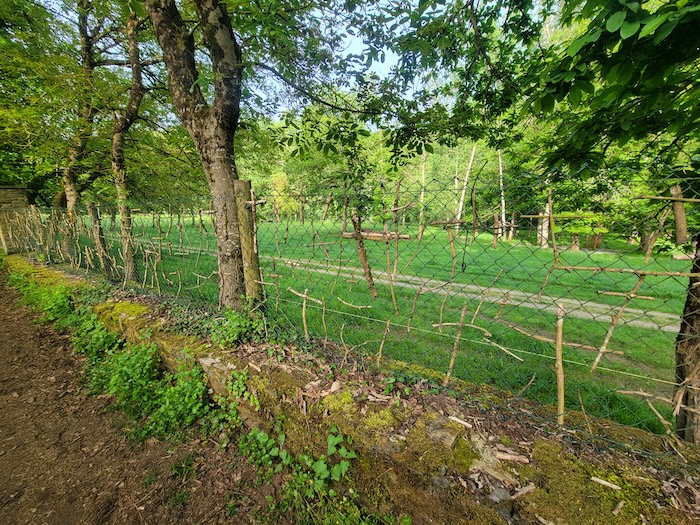
Barrio Theology, for me, is the way in which a community recognizes, expresses, and makes visible its relationship with God in the ordinary spaces of everyday life, lo cotidiano. Who has not seen religious murals or paintings of Our Lady of Guadalupe on buildings throughout a city, street altares in neighborhoods or on the porches of a house, crosses along roads where someone died in a car accident, or crosses placed on front doors or railings of houses?
In the barrios, faith is not only present in those visible ways; it is also present through the saints of everyday life, people whose holiness may never be officially recognized by the Church, but whom we know are still part of the communion of saints, the Militant Church. They are saints of our ordinary life.
For me, I can honestly say that my first image of holiness was not a stained-glass window.
It was my mom.
Every day, I saw holiness in her as she cooked for our family, as she made sure we had all of our school supplies, as she cared for us when we got hurt playing outside, as she managed our family’s finances, as she prayed to God for us, and, quite simply, as she loved us with her motherly love. My first image of holiness was my mom. It was in my domestic church.
Holiness is discovered in everyday life: in the school principal greeting children by name as they enter the building; in the woman who cleans offices or hospitals when no one is watching; in the man who works two jobs to provide for his family; or in people like your grandmother and my neighbors. They are ordinary people convinced that our work, our words, and our actions can also be offered to God. They are like the newspaper delivery person who does not only bring the news each day but also carries the Good News of God to the encounter of others.
Our faith is not merely devotional; it is deeply incarnational because we believe in a God who continues to be present in our history, in our streets, and in our families.
I remember when I was younger, the pilgrimages in which we carried Our Lady of Guadalupe from one parish to another, and the Eucharistic processions in which we processed with the Blessed Sacrament from one parish to another. We walked a little more than two miles, but every step was a profession of faith; the prayers, the songs, the candles, the incense, the matachines, each step was a visible sign of an incarnated spirituality.
Matachines are dancers whom many people have come to describe as soldiers of the Virgin Mary and of the Lord; their way of praying is through dance and moving to the rhythm of Christ and Mary Most Holy. During these processions, we wouldwalk as two different parishes, but as one Church. I remember one year in which I carried a candle during the procession of the Blessed Sacrament. The aroma of the incense mixed with the desert heat left its fragrance embedded in my clothing.
When we arrived at the parish, all united, we would spend time in Eucharistic adoration, placing before God our joys, our sorrows, our sufferings, and our prayers of thanksgiving. They were beautiful moments where I could not stop crying. Moments when, like the prophet Jeremiah, I could only say within myself: “You seduced me, Lord, and I let myself be seduced; you were too strong for me, and you prevailed” (Jeremiah 20:7).
After adoration, we would all celebrate together with a huge gathering. There was food, soft drinks, and water. Our spirits were also nourished, but so were the bonds between our two parishes. For each procession or pilgrimage, we would alternate parishes. One parish would begin the journey, and the other would receive us; the following time, we would switch.
Here at the University of Dayton, I have discovered other ways of living Catholicism, and I have learned so much from our students who come from different countries around the world. This has made me appreciate even more the richness of the popular religiosity in which I was raised and has inspired me to continue learning about the many ways faith is lived out in our universal Church.
La Fiesta de las Velitas in Colombia, La Fiesta de San Sebastián in Puerto Rico, Easter eggshells in the United States, Día de los Muertos in Mexico, the feast of Our Lady of Aparecida in Brazil, El Señor de los Milagros in Peru, or Las Pamplonadas and El Camino de Santiago in Spain are all different expressions of the same faith, and none of those are more or less Catholic than the other.
Today, when I think about my Hispanic/Latino heritage, I think about the bridge that I would cross to go from El Paso to Juarez, a metaphor to the way culture connects with my religious beliefs. A faith that is expressed through processions. A faith that smells like incense and handmade tortillas. A faith shown through a blessing before someone leaves the house and in religious murals painted throughout the city barrios.
I grew up in a world where the sacred always finds a way to make itself visible. Today, here at the University of Dayton, I continue to discover that this deeply incarnated spirituality is not only part of my Hispanic heritage; it is also a gift that I can offer to a truly universal Church.