I am a sophomore at the University of Dayton majoring in finance and business analytics. Through my experiences at UD, I have learned more about how I define success and the impact I want to have on others.
As I have gotten older, I have realized that success isn't always something you need to measure like money, goals and completed projects. For the longest time, I had the mindset that success was always working toward the next achievement and having something to show for it by completing it. However, many of the experiences that have shaped me have taught me that success can also be found in the impact you have on other people, the opportunities you help create and the person you become along the way.
A lot of this perspective comes from my family, who are Ahiska Turks, also known as Meskhetian Turks. One experience in particular that strongly shaped my perspective was how hard I saw my mom work in her physically demanding jobs during nighttime shifts. My dad also worked long hours to take care of the family, which allowed me and my siblings to experience life in America after they arrived in 2005 from Russia.
Seeing all this at a young age, I realized that nothing in life would be given to me; I needed to work for it so I could repay those I love for the effort they gave and so I could have a better life. I need not only to have fun but also to work hard, just as they did for me.
My experience as a Summer Impact Partner in the Fitz Center for Leadership in Community’s Educational Engagement Programs helped shape my perspective even further. When I was placed at the National Aviation Hall of Fame (NAHF), I thought that my success from this internship would be measured by the number of projects I completed, accomplishing specific goals and always working towards what's next — goal after goal.
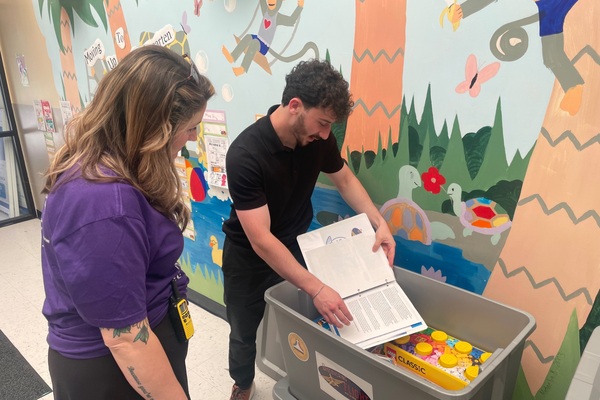
However, I realized that sometimes all of that doesn't matter; some of the most meaningful moments I had didn't come from spreadsheets or something being added to my resume. It can come from working with the kids and seeing how excited they became to learn about aviation, and simply watching them enjoy everything in the moment and not constantly worrying about what's next or what’s in the future. I learned to truly appreciate the experiences around me.
At the same time, my work at NAHF showed what it means to be a part of something bigger than yourself, something for the future. One of the projects I was able to contribute to was the design process and creation of the National Aviation Ecosystem Hub. The project involved organizing the prospects based on their possible connection to the Hall of Fame. For example, an aviation museum or flying club could be a strong prospect for association membership, while a large aerospace or defense company might be a better prospect for corporate membership. I helped categorize the organizations so the NAHF could use a more focused outreach strategy rather than sending the same message to every organization.
The project eventually developed into the idea of creating a National Aviation Heritage Network. My proposal was for the NAHF website to include an interactive national map or directory showing member organizations across the country. Each organization could have its name, logo, location, short description and website link displayed. This would give members additional recognition while also helping visitors discover aviation museums, organizations and educational opportunities in different states. It could also encourage more organizations to join because membership would provide both networking opportunities and public visibility.
The broader goal of the activity was not only to increase membership revenue. It was also to strengthen relationships across the aviation community. Aviation history, education, STEM programming, military service and aerospace development are connected, but many organizations operate separately. By identifying these organizations and bringing their information together, the Hall of Fame could become a stronger connector between aviation groups, educators, companies, students and communities. My part was only the start of creating something big, which taught me that you don't need to be at the center of success or at the center of recognition for it.
These experiences as a Summer Impact Partner taught me that one should always have goals and work hard in life, but you shouldn't make it the only measure of success in life. Success also means enjoying the people around you, those special moments in life or even when you can be a change-maker in someone else's life, contributing to something bigger than yourself.