Adapting for a Changing World

Since our founding in 1850, UD has adapted to meet the changing needs of the world. 

At UD, students build the knowledge and skills to use AI effectively and responsibly, preparing them to learn and lead in an increasingly AI-enabled world. This means that Flyers understand not only when to use AI but also when not to use it — and how to evaluate AI outputs.

Across campus, we also foster cutting-edge AI research, facilitate interdisciplinary collaborations, enhance performance and efficiency, and contribute to solving real-world challenges.

Aerial view of green space and buildings in central campus


AI in Action


Will Otterbein at the Davis Center, sitting at a desk with two computers showing fellow classmate how to use the AI Assistant
A junior finance major used AI during an investment research internship — and used those insights to create guardrails for investing at UD.
A Flyer‑developed AI tool gives marketing students real‑time sales call practice — and all the confidence that comes with it.
Left to Right: Dr. Kaitlyn DeGhetto (faculty), Joseph Deep (student), Allison Shelly (student), Luke Jenkins (student),  Jason Kintzele (student) and Professor Joseph Krella (faculty)
In the inaugural AI challenge, in collaboration with IBM, asked teams of students to tackle a timely issue: how can companies use AI responsibly while staying competitive?
Barath Narayanan (left), a senior research scientist at the University of Dayton Research Institute, and Russ Hardie (right), UD professor of electrical and computer engineering, in front of a computer screen with a lung scan
UD researchers are developing artificial intelligence to better detect lung nodules in CT scans of children.
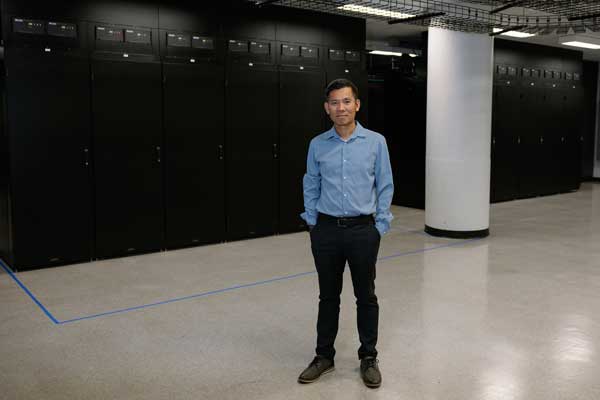
Assistant professor Ngoc Nguyen is co-leading a $300,000 National Science Foundation project to improve career matching for people on the autism spectrum.
Exterior facade of Miriam Hall
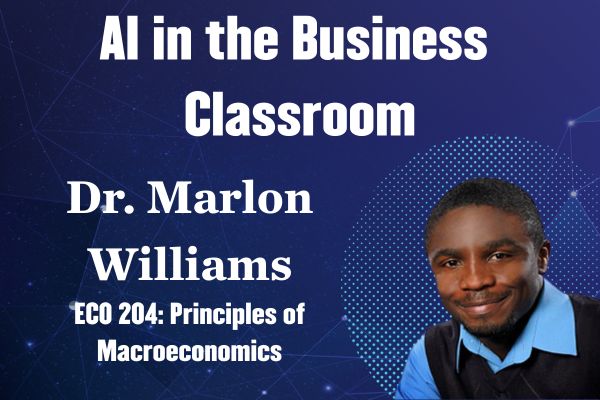
Business faculty are creating meaningful opportunities for students to engage with AI in responsible, career-relevant ways. Learn about their courses.
Faculty and staff explore AI through faith, ethics and education.

Core Principles

Our AI strategy, rooted in our Catholic and Marianist identity, is guided by five core principles.

  • Human Thriving and Human-Centered Use: Center human intelligence and responsibility that respects the dignity of each person and promotes the common good.
  • Ethical, Equitable, and Responsible Use: Ensure accessible, equitable, and inclusive access to AI tools and resources, guided by ethical standards of transparency, accountability, sustainability, and privacy. Proactively account for bias and misuse, maintain human oversight, and foster ethical reasoning across UD.  
  • Student-Centric Approach: Engage with AI to enhance the student learning experience, support their well-being, and prepare them for future careers.
  • Innovation and Research: Foster a culture of critical experimentation and research in AI, contributing to advancements in the field and interdisciplinary collaboration. 
  • Organizational Excellence and Efficiency: Advance organizational excellence and operational efficiency through bold, strategic use of AI to streamline and strengthen University performance, optimize campus operations, and further UD’s mission and identity.