454 Lowes St.
454 Lowes St.
House facts
-
1910
Year built
-
1,096
Square feet
-
2 bedrooms, 1 bathroom
Beds and baths
It was definitely not the prettiest house, but to Tom Cunningham ’78 and his four roommates in the late 1970s, 454 Lowes was home.
Listening to familiar tunes like Bruce Springsteen’s Born to Run immediately takes him back to Dayton — and onto that old rickety porch.
The landlord house was known for three things: “a good hang … with good guys and good music,” Cunningham said.
And Cunningham knew his music. As a communication major, he wrote for Flyer News, reviewing albums and concerts, and was on the air at WVUD, the University-owned freeform rock station known as “the Voice of the University of Dayton.” The station’s legacy continues today through WUDR Flyer Radio.
It’s no surprise that he often brought new music home from the studio for the roommates to listen to, paired with old favorites: Jackson Browne mixed in with the latest from Little Feat, Dan Fogelberg and Fleetwood Mac.
The music acted as a spell, drawing in anyone who heard it. Friends came from around the neighborhood to lean on the house’s tattered door frame and listen. Neighbors sat along the well-worn porch rails, and strangers hung on the bruised pillar that barely held up the roof. Tunes drifted from the stereo system and radio, the centerpiece of 454 Lowes, and softened the rough edges of the ramshackle house.
“It was this very oddball revolving door of … characters who floated in and out of there,” Cunningham said. Some were students looking for a place to land, folding into the core group of friends who had met as freshmen in Founders.
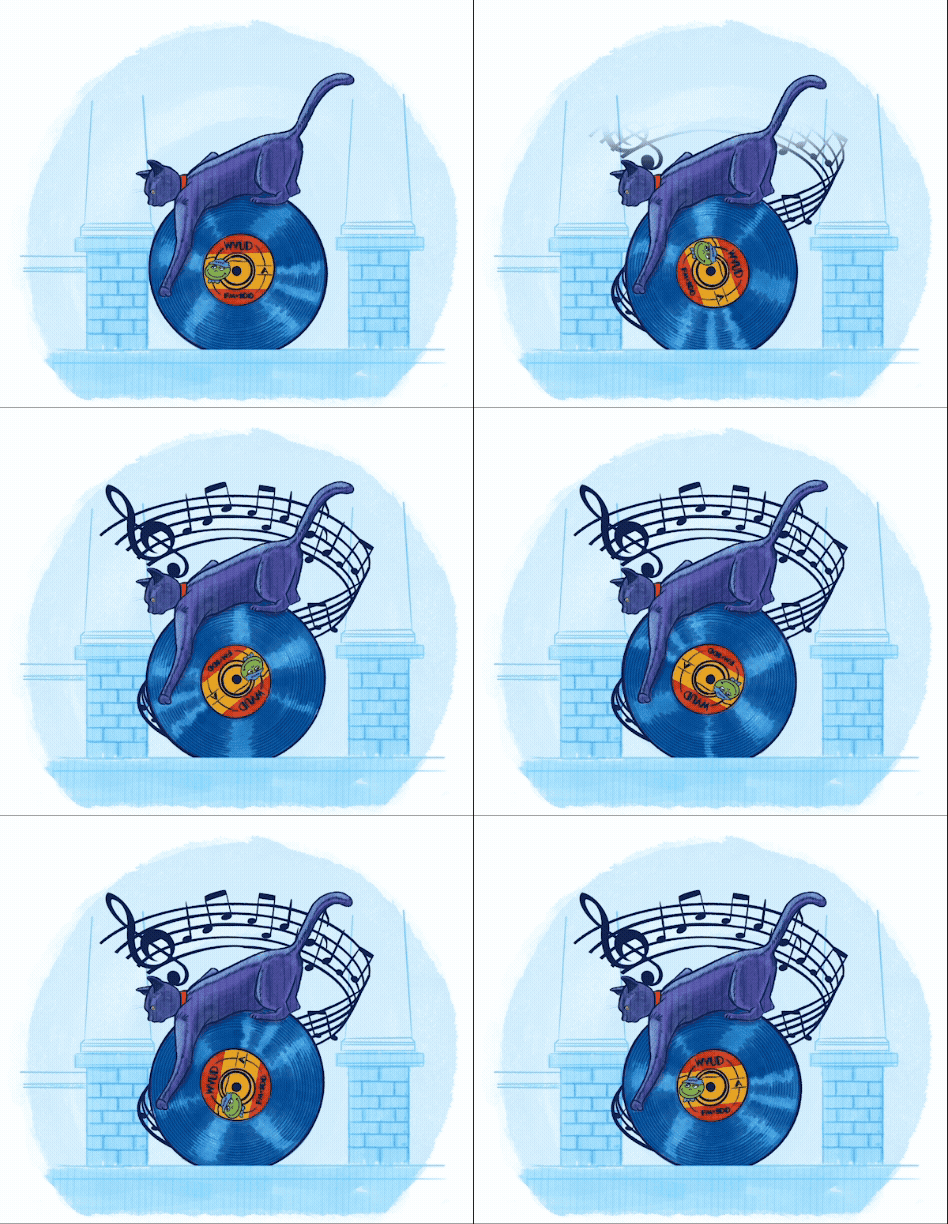
So did a local black cat that soon became their own. They named him Maurice, after the Steve Miller Band song, “The Joker”: “Some people call me the space cowboy, yeah, / Some call me the gangster of love / Some people call me Maurice / ‘Cause I speak of the pompatus of love.”
Maurice appeared on their doorstep one quiet afternoon and evolved into the “house cat deluxe.” He stayed through breaks and the summer of 1977, eventually getting adopted by friends after the roommates graduated.
Life inside the house was memorable for reasons beyond music. The shower was “this phone‑booth‑sized metal thing,” Cunningham said, something that “probably would have failed every health code.” There was one bathroom, the archetypal scary basement and a porch that served as the social center of the block.
In 2013, Cunningham returned to Lowes Street and found that the house had been remodeled. It was a bittersweet moment; that house held so many memories, as most houses in the student neighborhood do.
He laughed, thinking back to his junior and senior years and the summer of 1977 when he called Lowes Street home: “No one was going to put [that] house in Better Homes and Gardens,” Cunningham said.
Though it had been updated, the most important aspect of the house remained: the porch — its floorboards still echoing with the melodies that once called out to anyone who wandered by.
Illustration by Kevin M. Johnson.
A version of this article appears in print in the Autumn 2026 University of Dayton Magazine, Page 46. EXPLORE THE ISSUE — MORE ONLINE