- Ph.D., Bowling Green State University
Arthur J Jipson
Associate Professor
Full-Time Faculty
College of Arts and Sciences:
Sociology, Anthropology, and Social Work
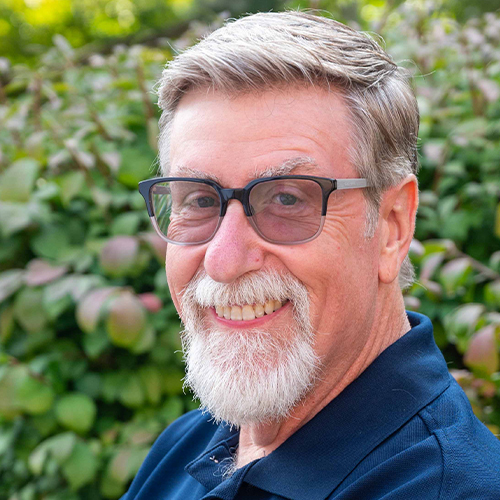
Arthur J Jipson
Associate Professor
Full-Time Faculty
College of Arts and Sciences:
Sociology, Anthropology, and Social Work
Degrees
Profile
Dr. Arthur Jipson is an Associate Professor of Sociology at the University of Dayton. He received his Ph.D. from Bowling Green State University and joined the University of Dayton faculty in 2001, receiving tenure in 2004.
Dr. Jipson's research focuses on extremism, white nationalism and white supremacy, conspiracy movements, political violence, social movements and digital culture. For more than three decades, he has studied white supremacist and extremist movements, examining their organization, ideology, recruitment, cultural practices and mobilization strategies. His recent research examines how extremist movements use online communities, social media, conspiracy theories and popular culture to build networks, disseminate ideas and recruit participants. He also studies contemporary intersections of extremism, religion and political culture, including white Christian nationalism and the New Apostolic Reformation.
His broader research interests include sociology and criminology of crime and deviance, Internet and digital culture, media and visual sociology, popular music, and commemoration and public memorialization. His scholarship has appeared in academic publications as well as public-facing outlets including The Conversation, where he writes about extremism, conspiracy theories, white nationalism and political violence.
Faculty perspective
I am an Associate Professor of Sociology at the University of Dayton. As a first-generation college student, I earned my bachelor's degree from the University of Minnesota in 1988 and my master's degree (1991) and Ph.D. (1995) in sociology from Bowling Green State University. I joined the University of Dayton faculty in 2001 and received tenure in 2004.
My teaching and scholarship are grounded in a simple idea: sociology should help us understand the social world we actually inhabit. I encourage my students to look critically at familiar experiences, question assumptions, consider perspectives different from their own, and use sociological concepts and evidence to make sense of complex social issues. My goal is not to teach students what to think, but to help them develop the tools to think more carefully, critically and independently.
Research interests
My research focuses on extremism, white nationalism and white supremacy, conspiracy movements, political violence, social movements and digital culture. I examine how movements organize, communicate, construct identities, recruit participants, and respond to social and political change. My broader scholarship includes crime and criminology, conflict and inequality, the Internet and online communities, popular music and memorialization. I have also studied popular music as a form of social and cultural expression, examining how music reflects identity, community, politics and social change. My research on roadside and spontaneous memorials explores how people publicly remember loss, create meaning and transform everyday spaces into places of memory and collective expression.
Across my teaching, research and public scholarship, I return to the same fundamental questions: How do people make sense of the social world? How do systems of power and inequality shape that world? And how do individuals and movements work to change it — or keep it from changing?
I see teaching and research as connected parts of the same intellectual project. Both give me opportunities to remain curious, learn from others, and explore questions that matter. I feel fortunate to have spent my career in a field that continually challenges me to look more closely at the world — and to help students do the same.
Selected publications
Book Chapters
- "Constructing Commemoration: The Civil Rights Memorial as a Marker of Public Grief" (with P. J. Becker), in Memorial Art in Rhetorical Discourse.
- "Introduction: Intentionality (Belonging as Mission in the Age of AI)," in Curiosity for the Common Good: A Catholic, Marianist University in the Era of AI (2026).
- "Magnifica Humanitas: Pope Leo XIV’s Call to Restore Human Dignity in the Age of Algorithms," in Curiosity for the Common Good (2026).
Public Scholarship
- “White Supremacists Spin SPLC Indictment to Legitimize Extremism and Expand Online Recruitment.” The Conversation (2026).
- “Fauci’s COVID-origins Hearing Shows How Conspiracy Theories Became Political Weapons.” The Conversation (2026).
- “The Conspiracy Theorists Who Feel Vindicated by the Epstein Files.” The Conversation (2026).
- “What Is Christian Reconstructionism — and Why It Matters in U.S. Politics.” The Conversation (2026).
- “Why Texas Prosecutors Are Calling a Teenage Shooting Spree ‘Terrorism’ — and Why the Case Could Reshape American Criminal Law.” The Conversation (2026).
- “Active Clubs Are White Supremacy’s New, Dangerous Frontier.” The Conversation (2025).
- “How the QAnon Movement Entered Mainstream Politics — and Why the Silence on Epstein Files Matters.” The Conversation (2025).
- “The Complex Role of Roadside Memorials.” The Academic Minute, January 6, 2025.
- “What Is the Seven Mountains Mandate and How Is It Linked to Political Extremism in the U.S.?” The Conversation (2025).
- “A Field Guide to ‘Accelerationism’: White Supremacist Groups Using Violence to Spur Race War and Create Social Chaos.” The Conversation (2025).
- “The Term ‘Lone Gunman’ Ignores the Structures That Enable Violence.” The Conversation (2025).
- “New Apostolic Reformation: Evangelicals See Trump as God’s Warrior in Their Battle to Win America from Satanic Forces and Christianize It.” Christian Ethics Today (2025).
- “Right-Wing Extremist Violence Is More Frequent and More Deadly Than Left-Wing Violence — What the Data Shows.” The Conversation, with P. J. Becker (2025).
- “The Complex Role of Roadside Memorials.” Academic Minute (2025).
- “Though Home to About 50 White Extremist Groups, Ohio’s Social and Political Landscape Is Undergoing Rapid Racial Change.” The Conversation, with P. J. Becker (2024).
- “Replacement Theory Isn’t New: 3 Things to Know About How This Once-Fringe Conspiracy Has Become More Mainstream.” The Conversation, with P. J. Becker (2022).
Since 2004, I have hosted Your Tuesday Afternoon Alternative on WUDR Flyer Radio, the University of Dayton’s student-run radio station. The weekly program features alternative, independent and local music, with a particular focus on musicians and bands from the Dayton region. Over more than two decades on the air, the program has connected my longstanding interest in popular music with the University of Dayton community and Dayton’s vibrant musical culture. Through interviews, music programming and conversations with local artists, Your Tuesday Afternoon Alternative also serves as a form of public scholarship and community engagement.